JAIPUR, RAJASTHAN · POTTERY AND TERRACOTTA · GI REGISTERED
Jaipur blue pottery is the rarest thing in Indian ceramics — a pottery made without clay. The body is quartz, and it is neither thrown on a wheel nor fired the way earthenware is.
The craft
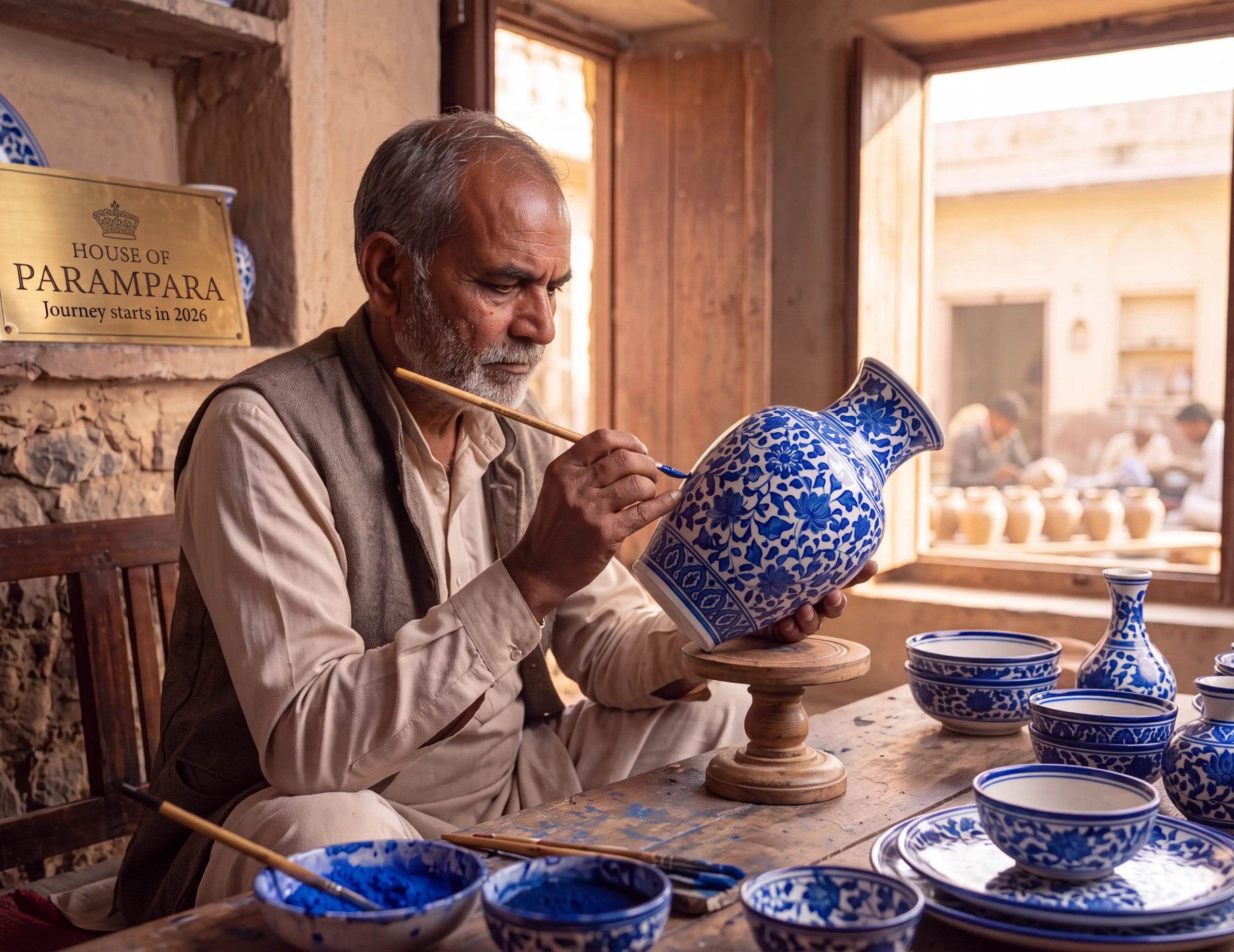
The dough is ground quartz stone bound with powdered glass frit, borax, gum and fuller’s earth. Because it has no plasticity, it cannot be raised on a wheel; it is pressed into moulds, dried, and hollow-turned by hand. Cobalt oxide gives the blue, copper oxide the turquoise, and the flowers are painted freehand — often with a pressed cotton swab rather than a brush. A clear glaze goes over the whole surface and the piece is fired once, at low temperature, in a kiln where the pots must not touch. The failure rate is high; the survivors ring like glass.
Provenance
Blue Pottery of Jaipur carries a Geographical Indication. The technique arrived with Turko-Persian craftsmen and was revived under Jaipur’s royal patronage in the nineteenth century; the bazaar at Chandpole has sold these vases for generations. Because the body is non-porous and lead-free, blue pottery is one of the few Indian ceramic traditions that has always been safe for food and water.
The hands
Jaipur blue pottery contains no clay at all: a ground-quartz body, hand-pressed and painted in cobalt and turquoise, fired once at low heat. The craft nearly vanished within living memory; a handful of master units brought it back and carry it still.
What the craft is up against
A revived craft is a fragile craft. Few masters, fewer trained juniors, and a market crowded with cheaper ceramic look-alikes.
What your gift sustains
Premium orders underwrite the revival’s second generation — the apprentice wages and kiln time that turn a rescued craft into a living one.
Gift this craft — every order is sourced fairly from this cluster.