
JODHPUR, RAJASTHAN · HANDLOOM AND TEXTILES · HERITAGE CRAFT
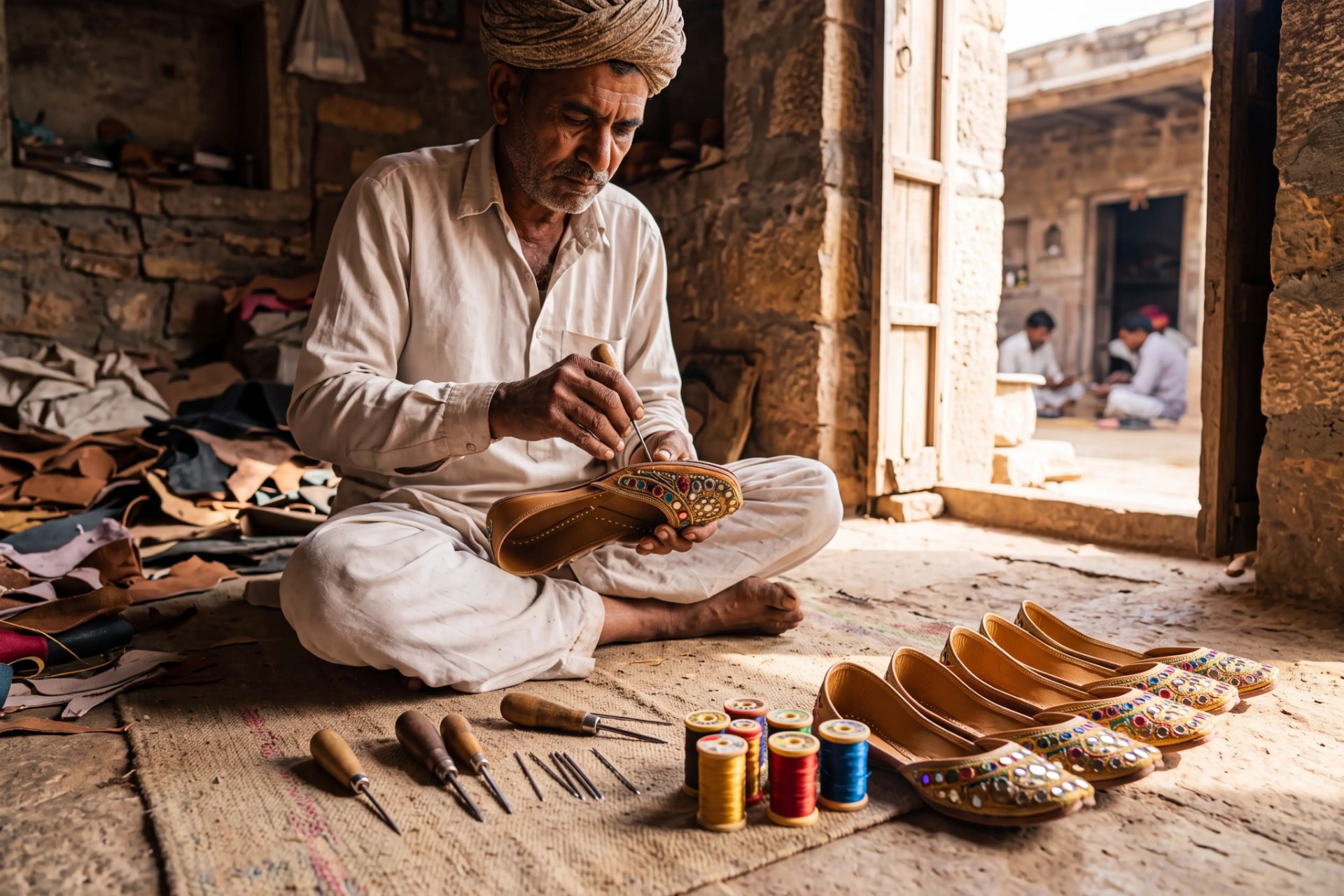
The mojari is Rajasthan’s ceremonial shoe — flat-soled, curled at the toe, cut from a single piece of camel or goat leather and finished by lamplight in the old quarters of Jodhpur.
The craft
The upper is embroidered separately on a small wooden frame, then joined to the sole with a saddler’s stitch that runs both inside and out, so the seam carries load from either face. There is no left and no right: both shoes of a pair are cut identically and the wearer breaks them in, the leather learning the foot over a season. The toe-curl is anchored with a hidden pin of wire. Thread is cotton or silk, laid in tilla and dori work, and the vegetable-tanned leather is worked while still slightly damp, when it will take a curve and keep it.
Provenance
Mojari making is a hereditary trade of Rajasthan’s leather-working communities, concentrated around Jodhpur and Jaipur and traditionally tied to the wedding season. The craft is hand-work from start to finish — cutting, lasting, embroidering and stitching — and a maker of four decades will still finish the embroidery at night, when the coloured thread lies flatter in lamplight than it does in the sun.
The hands
Every embroidered wedding mojari begins in the hands of Jodhpur’s hereditary leather-working families — communities whose craft dressed celebrations for centuries while society kept the makers themselves at its margins.
What the craft is up against
The old hierarchy lingers in the pricing: the more invisible the maker, the thinner the margin. Machine-made footwear presses from the other side.
What your gift sustains
Naming the makers and paying a fair price is a form of respect these families were long denied. A mojari bought this way carries more than embroidery — it carries a correction.
Gift this craft — every order is sourced fairly from this cluster.