

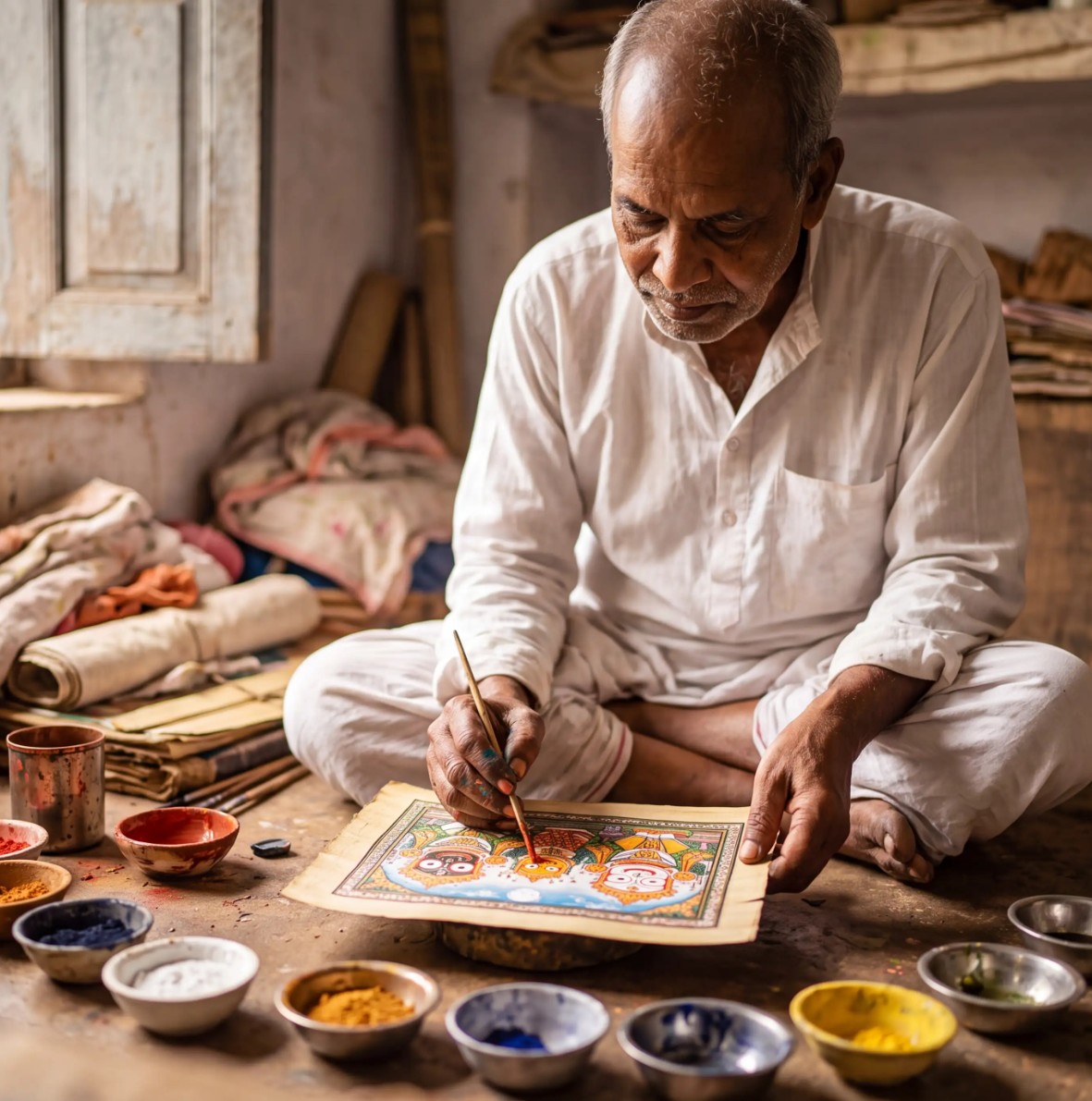
In Raghurajpur, nearly every household paints — a whole-village craft economy exposed to tourism dips, steadied by commissioned scrolls.
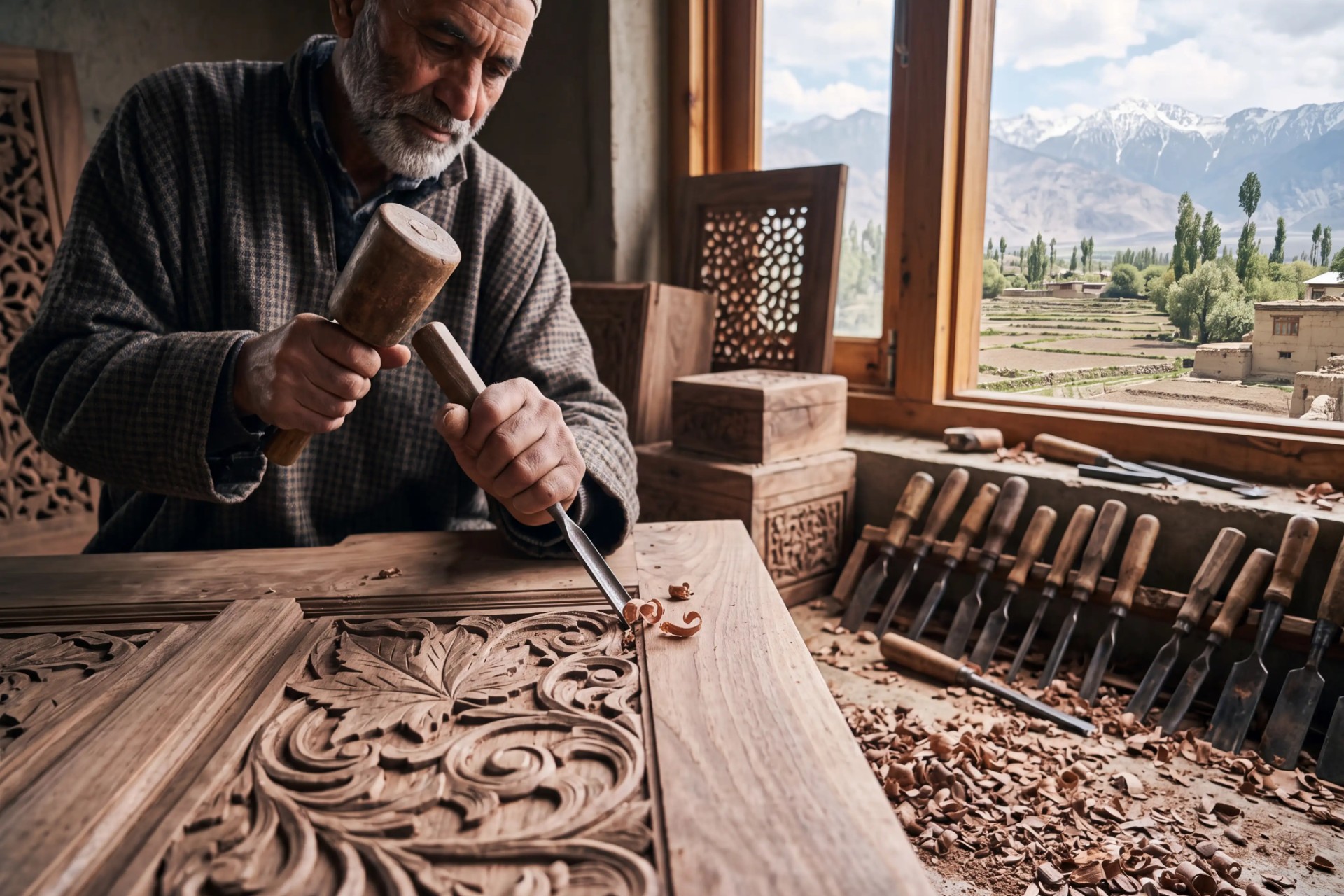
Srinagar’s naqash carvers spend up to a year on a single walnut panel — patient work that survives only on patient, fairly-advanced patronage.
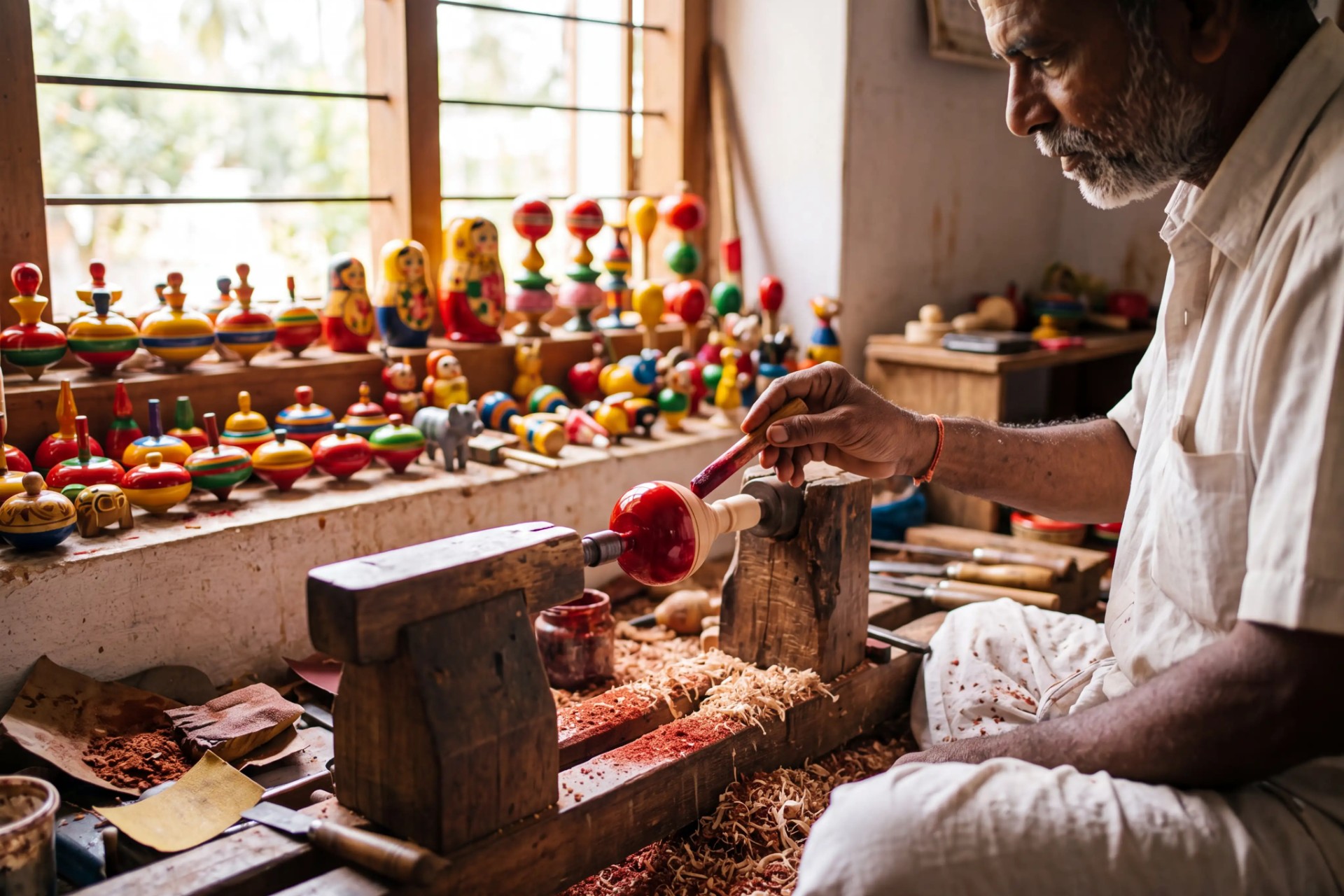
In Karnataka’s toy town, families turn ivory-wood on the lathe and colour it with vegetable lacquer — child-safe by tradition, undercut by imported plastic.
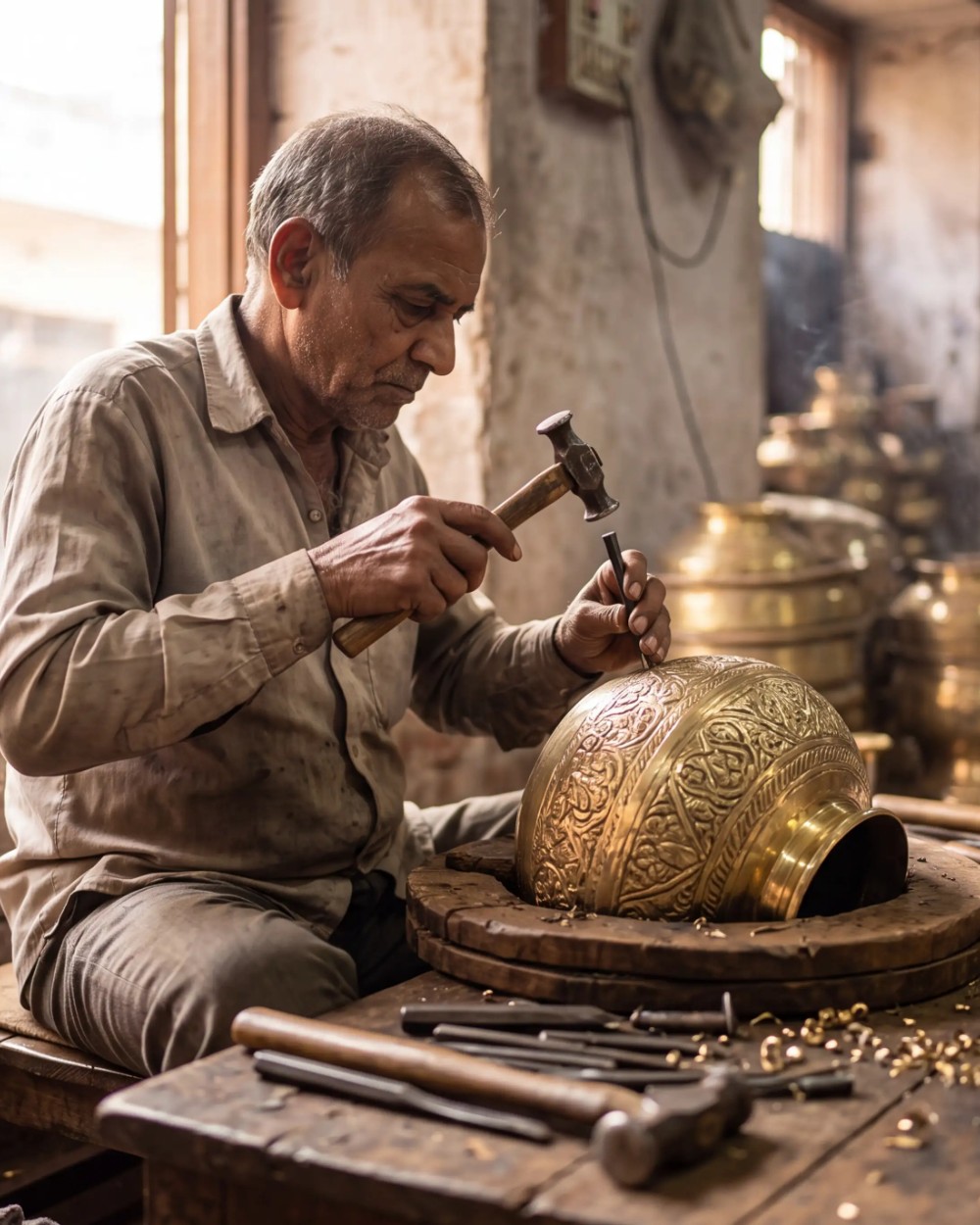
Behind every Moradabad brass piece stands a chain of karigars — caster, engraver, polisher — each on margins thinner than the metal.
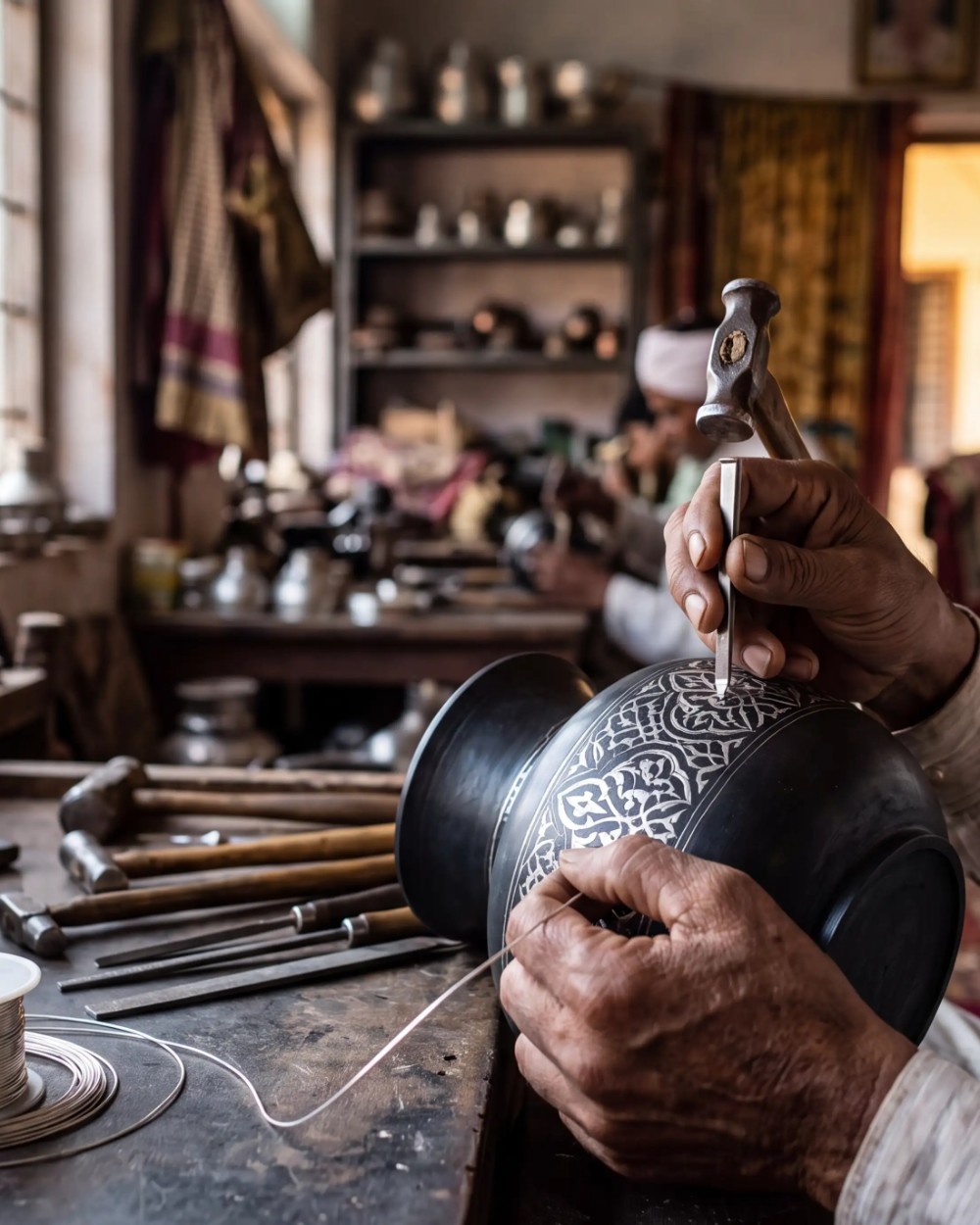
Only a few hundred practising bidri artisans remain in Bidar — every genuine purchase sustains a community small enough to count.
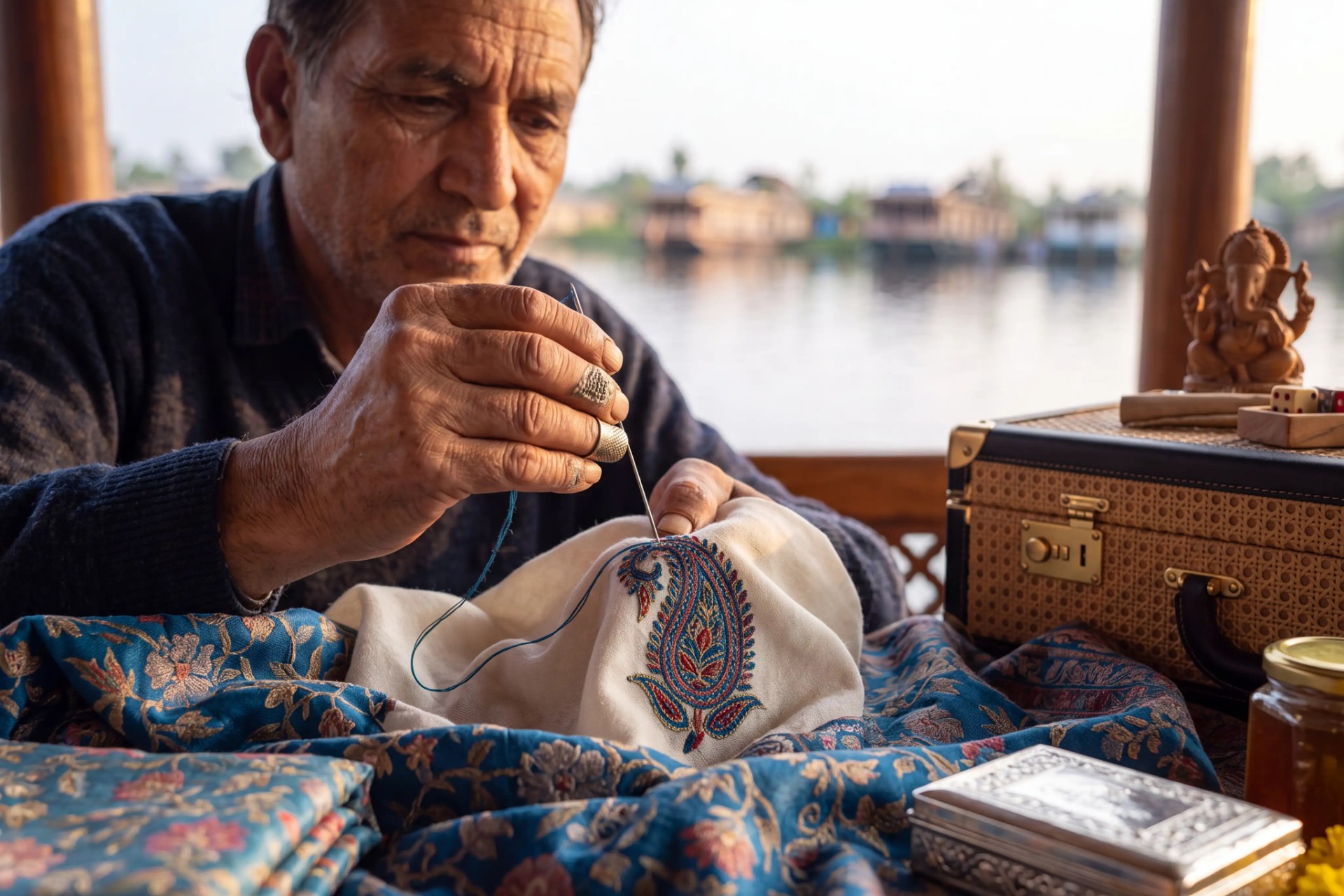
About a dozen specialists touch every genuine pashmina — while machine-made “pashmina” fraud steals their market wholesale.
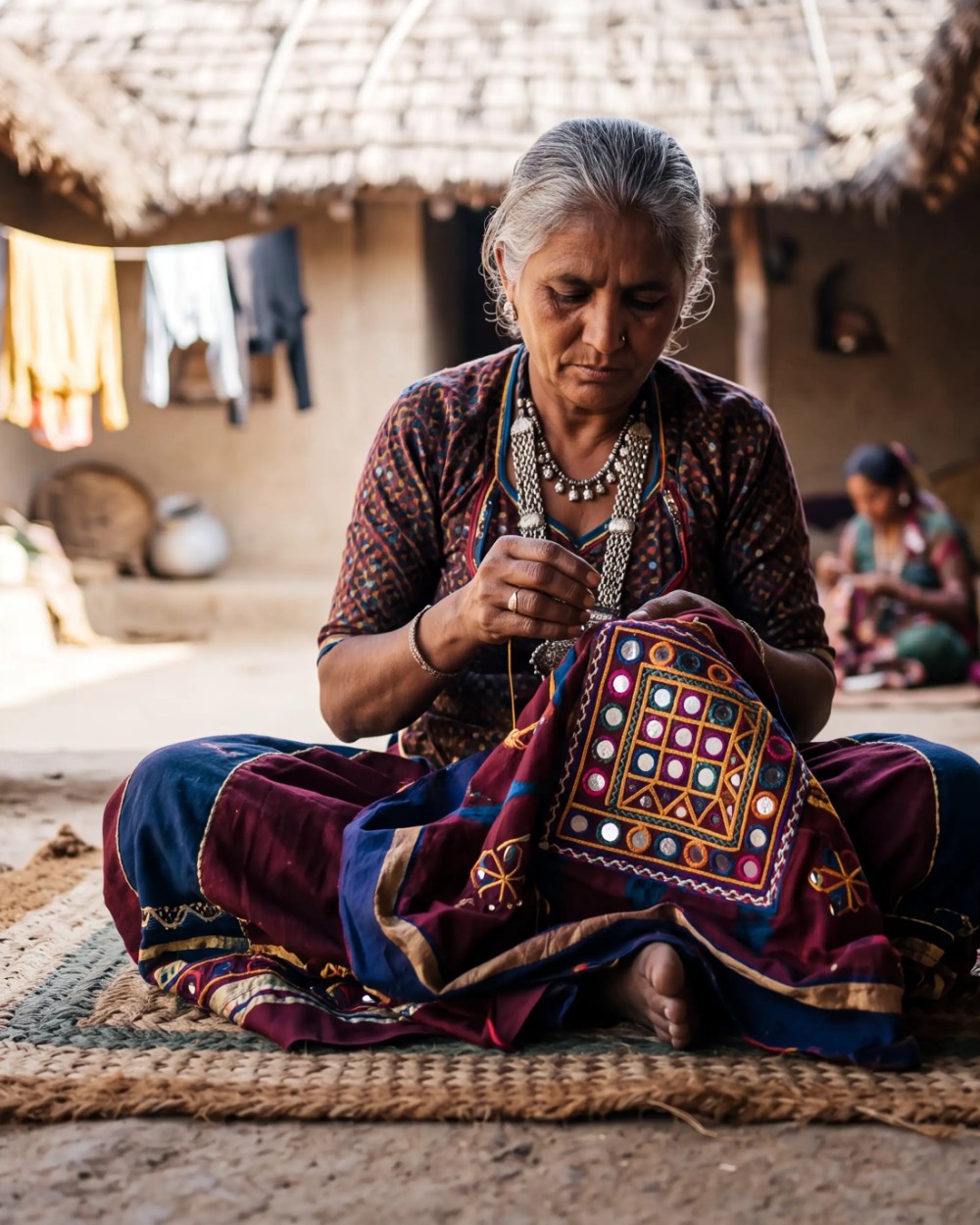
After the 2001 earthquake, Kutch’s women rebuilt livelihoods stitch by stitch — collectives that keep embroidery income in women’s hands.
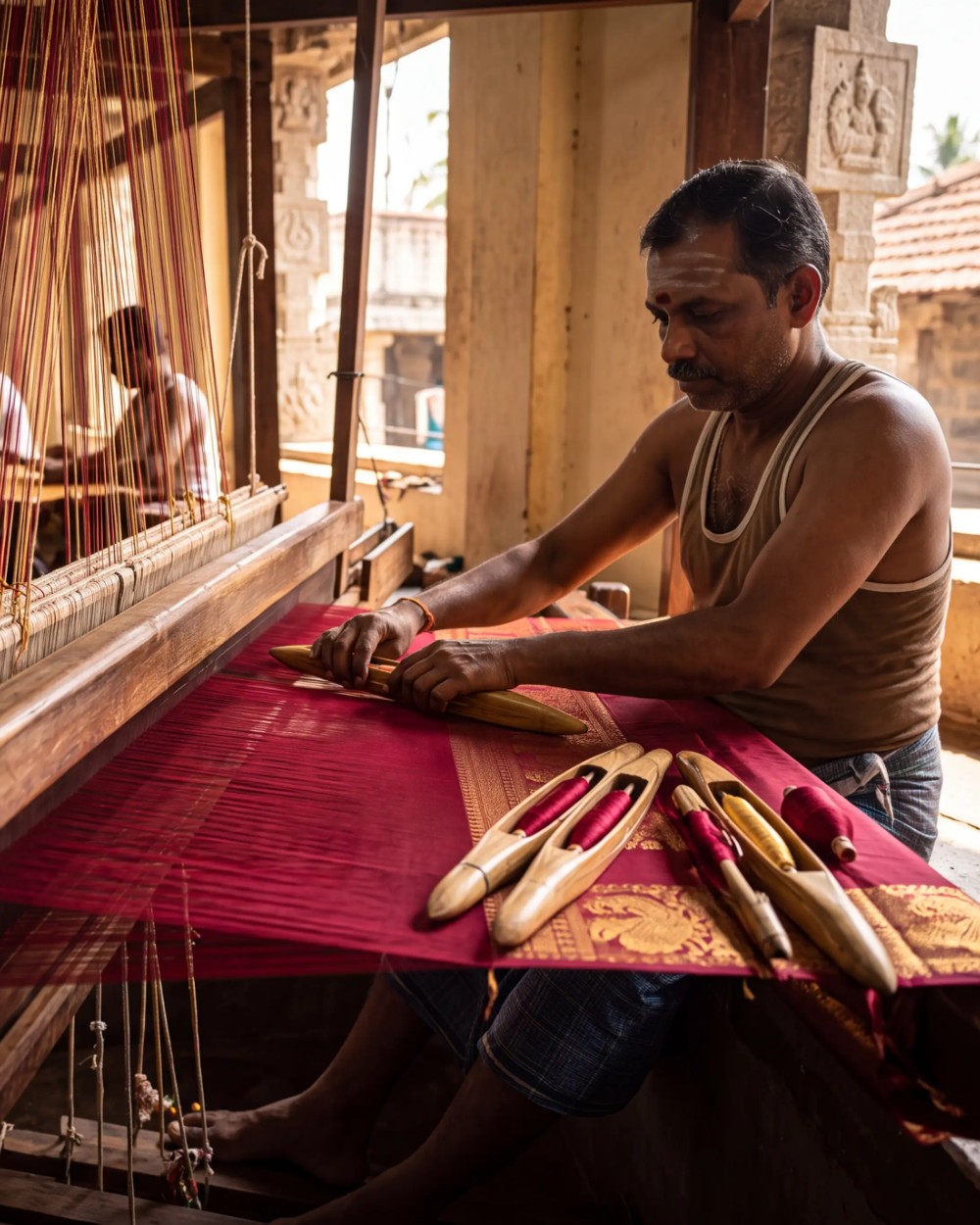
Several weeks of one family’s labour go into a single Kanjeevaram — and the korvai join that defines it grows scarcer as the young leave the looms.
We value your privacy
We use essential cookies to run this site. With your permission we would also use analytics cookies to understand how the site is used. Nothing non-essential is set until you agree. Read our Privacy Policy.
Strictly necessary
Required for the site to function — security, load balancing and remembering this choice. These cannot be switched off.
Statistics
Google Analytics, so we can see which collections and artisan stories people read. Data is aggregated and never used to identify you.
Preferences
Remembers choices such as language or region so you do not have to set them again.
Marketing
Used to measure campaigns and show relevant content. We do not currently run advertising, so this stays off unless you enable it.