SRINAGAR, JAMMU AND KASHMIR · HANDLOOM AND TEXTILES · GI REGISTERED
A genuine Kashmiri pashmina begins at around fourteen thousand feet, on the back of the Changthangi goat that winters on the Changthang plateau in Ladakh. By the time it reaches a shoulder somewhere else in the world, it has passed through the hands of a dozen different specialists.
The craft
The fleece is combed out rather than sheared, then de-haired and hand-spun on a wooden wheel called the yinder, traditionally by women. The fibre is too fine to survive a power spindle. Weaving is done on a handloom, and only then does the embroiderer begin.
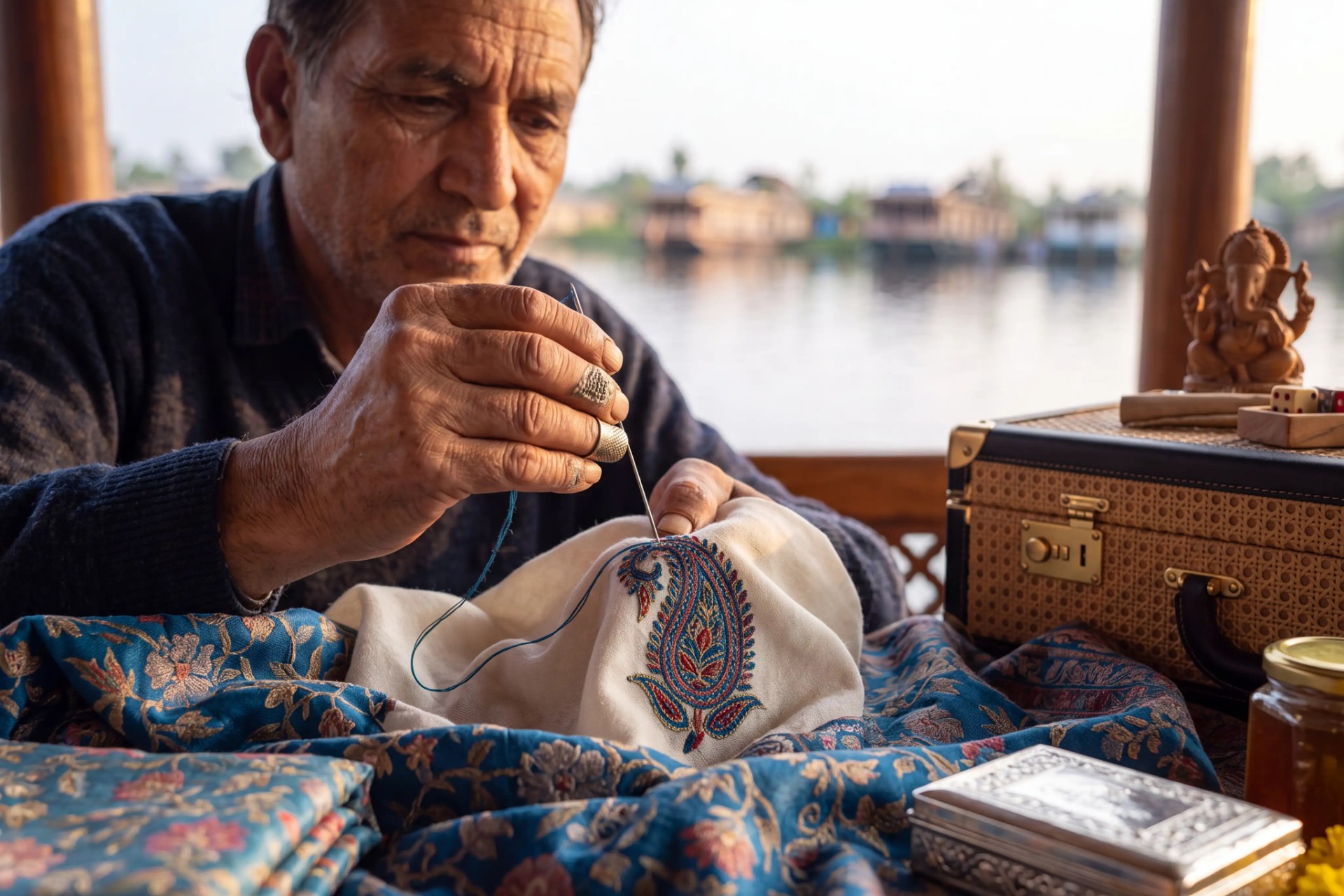
Sozni is the signature needle technique: the artisan works a design so evenly that the reverse of the shawl is almost as clean as the face. A do-rukha shawl is embroidered on both sides, often in different colours. Kani weaving takes another route altogether, replacing the shuttle with small wooden bobbins and advancing the pattern line by line, at a pace sometimes measured in centimetres per month.
Provenance
Kashmir Pashmina is a registered Geographical Indication, and genuine pieces can be tested and certified in Srinagar. Machine-spun blends are nevertheless sold worldwide under the same name. We source only hand-spun, handwoven pieces, and the certification travels with the shawl.
The hands
A genuine pashmina is a dozen livelihoods in sequence: the comber and spinner of the fine under-fleece — spinning so delicate it is largely women’s mastery — the warper, the weaver, the washer, and then the sozni master whose needle covers the field in stitches almost too small to see.
What the craft is up against
Machine-made shawls sold as “pashmina” commit fraud twice over: against the buyer who overpays for the fake, and against the dozen specialists whose market it steals.
What your gift sustains
Authenticity checks plus a fair price protect the whole sequence — a dozen households paid properly for what only their hands can do.
Gift this craft — every order is sourced fairly from this cluster.