
KUTCH, GUJARAT · HANDLOOM AND TEXTILES · GI REGISTERED
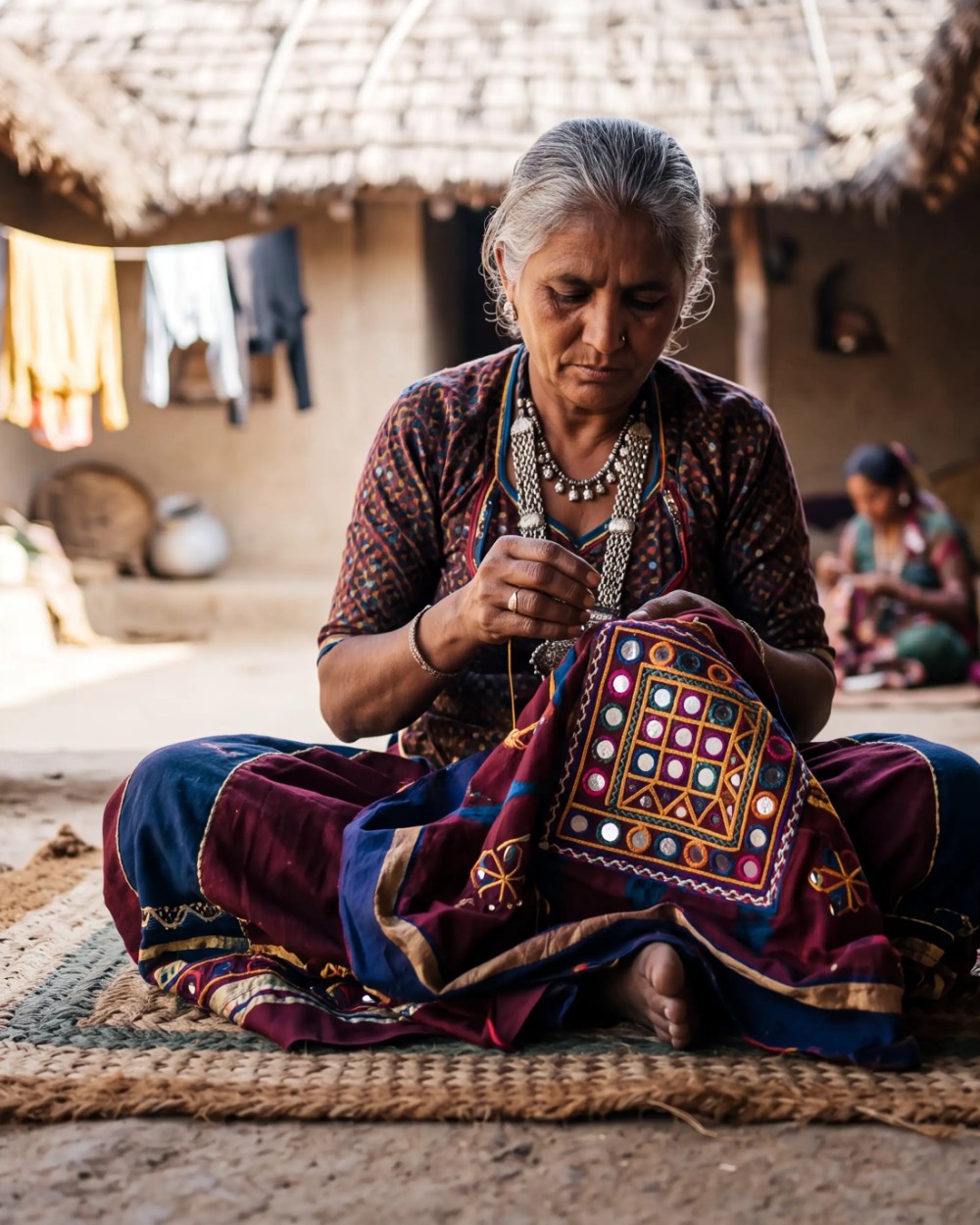
Across the arid villages of Kutch in western Gujarat, embroidery is a household language. It is stitched largely by women, learned from mothers and grandmothers, and read by other Kutchis roughly the way a signature is read.
The craft
What gets sold abroad as a single style is really a family of distinct traditions belonging to distinct communities. Suf and khaarek are fine geometric work counted along the warp and weft of the cloth. Aari is a dense chain stitch worked with a hooked awl. Rabari embroidery is bold and generous with abhla, the small mirror discs. Mutwa stitching is worked so small that it is easier to judge under a magnifier.
Suf is the most demanding of them. It is counted from the reverse of the fabric, which means the whole design has to exist in the embroiderer’s head before a single stitch appears on the face of the cloth.
Provenance
Kutch Embroidery holds a Geographical Indication registration for Gujarat. Much of the trade nonetheless still runs through layers of middlemen. We commission directly from artisan collectives and self-help groups in the region, so that the woman who counted the stitches is the person who is paid for them.
The hands
In Kutch, embroidery is identity you can read: each community’s stitches — mirror-set, counted, chained — declare who made the cloth. After the 2001 earthquake flattened villages, it was women’s collectives that stitched livelihoods back, turning heritage skill into organised income.
What the craft is up against
Left to open middlemen chains, museum-grade embroidery earns its makers the least of anyone in the transaction.
What your gift sustains
Orders routed through the collectives keep the income in women’s hands — the same hands that rebuilt Kutch once already, and are still its steadiest economy.
Gift this craft — every order is sourced fairly from this cluster.