

BHOPAL, MADHYA PRADESH · POTTERY AND TERRACOTTA · HERITAGE CRAFT
A potter in Bhopal works his grandfather’s wheel and fires in a pit kiln fed with mango leaf and cow dung. He does not measure anything. He judges the clay by the sound it makes when struck.
The craft
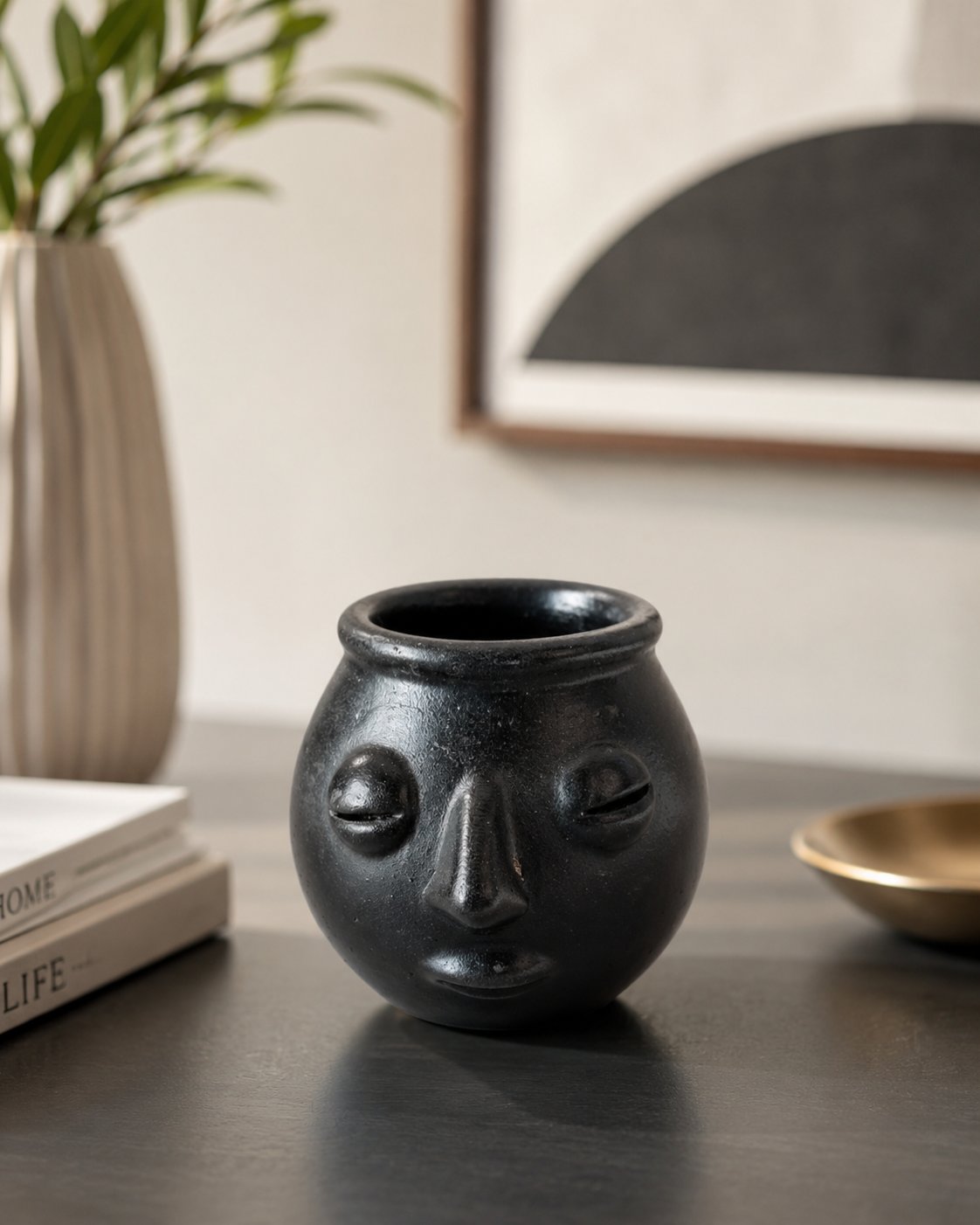
Black clay cookware is made by reduction firing. The pots are thrown, dried and stacked in a pit, then smothered with leaf, husk and dung and sealed so that air cannot reach them. Starved of oxygen, the fire pulls it out of the clay itself, and the iron in the body turns from red to a deep charcoal grey. Nothing is painted on; the colour is a chemical event, not a coating. The vessels are then burnished. Cooking in them is slow and even, and the clay seasons over months the way iron does, holding the character of what has been cooked before.
Provenance
Unglazed black cookware belongs to a family of reduction-fired traditions found across central and northern India, of which Nizamabad in Uttar Pradesh is the best known. The forms here are working ones — the handi, the seasoning pan, the tumbler, the festival diya — and the maker judges the water-to-clay ratio by the dampness on the back of his wrist rather than by any measure.
The hands
Bhopal’s black-clay potters fire in pit kilns the way their families always have — mastery practised entirely inside the informal economy, where no register counts the skill and no card carries the name.
What the craft is up against
What is unmeasured is easily unpaid. Informality means no documentation, no credit history, no leverage — however fine the work.
What your gift sustains
The House documents the workshop, prints the credit on the story card, and places steady orders. Measurement, then recognition, then a fair rate — in that order, and all three matter.
Gift this craft — every order is sourced fairly from this cluster.