SRINAGAR, KASHMIR · HANDLOOM AND TEXTILES · HERITAGE CRAFT
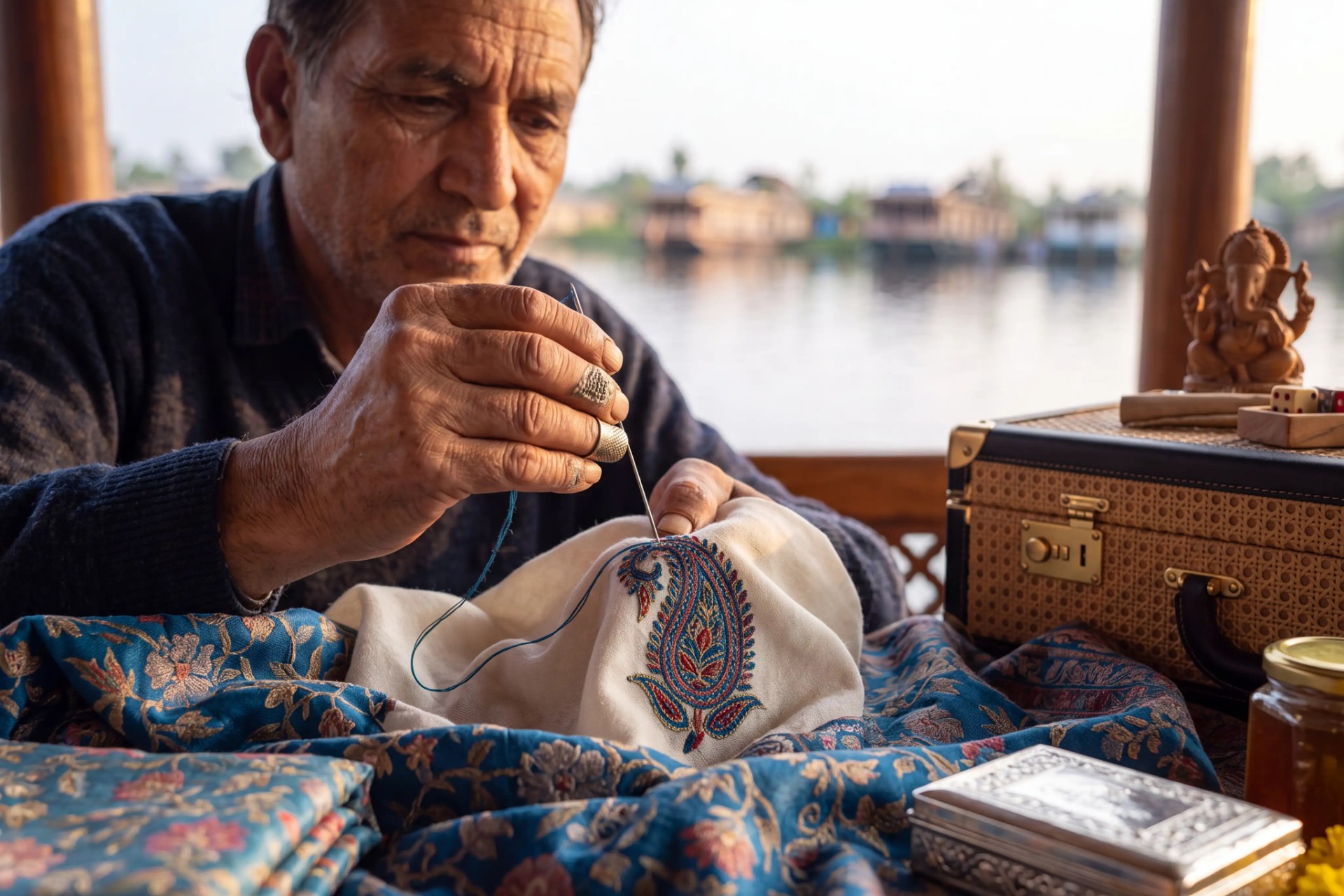
On a wooden houseboat moored to the bank of Dal Lake, a family has embroidered for four generations — the same boat, the same hook, the same wintering patterns worked into wool.
The craft
Aari is chain-stitch worked with a hooked awl rather than a needle. The hook is pushed through stretched cloth from above, catches the thread held below, and draws up a loop; the next push locks it. Because the wrist never turns, the line can travel anywhere the design asks, which is why aari carries curves that needle-work struggles with — above all the buta, the Kashmiri paisley, drawn as a leaning teardrop with a curled tip. Crewel, its larger cousin, uses the same hook in thicker wool on cotton duck for curtains and upholstery. A dense shawl border can take a winter.
Provenance
Kashmir’s needle traditions divide by hand rather than by motif: sozni is flat needle-work of extraordinary fineness, aari is hook-work, and kani is woven on the loom, not embroidered at all. The valley’s embroidery is seasonal work by habit — the frames come out when the fields close for winter, which is also when the light through a houseboat window is at its steadiest.
The hands
On a Srinagar houseboat, four generations of one family have worked the aari — the fine hooked needle that chains silk thread across wool and cotton at astonishing speed. The craft is the household; the household is the workshop.
What the craft is up against
Kashmiri craft incomes ride Kashmir’s fortunes. Every tourism shock and every closure empties the order book of families with no other buyer channel.
What your gift sustains
Direct orders bypass the fragile tourist season entirely. A commission from outside the valley is steadiness the valley itself cannot always provide.
Gift this craft — every order is sourced fairly from this cluster.