
BAGRU, RAJASTHAN · HANDLOOM AND TEXTILES · GI REGISTERED
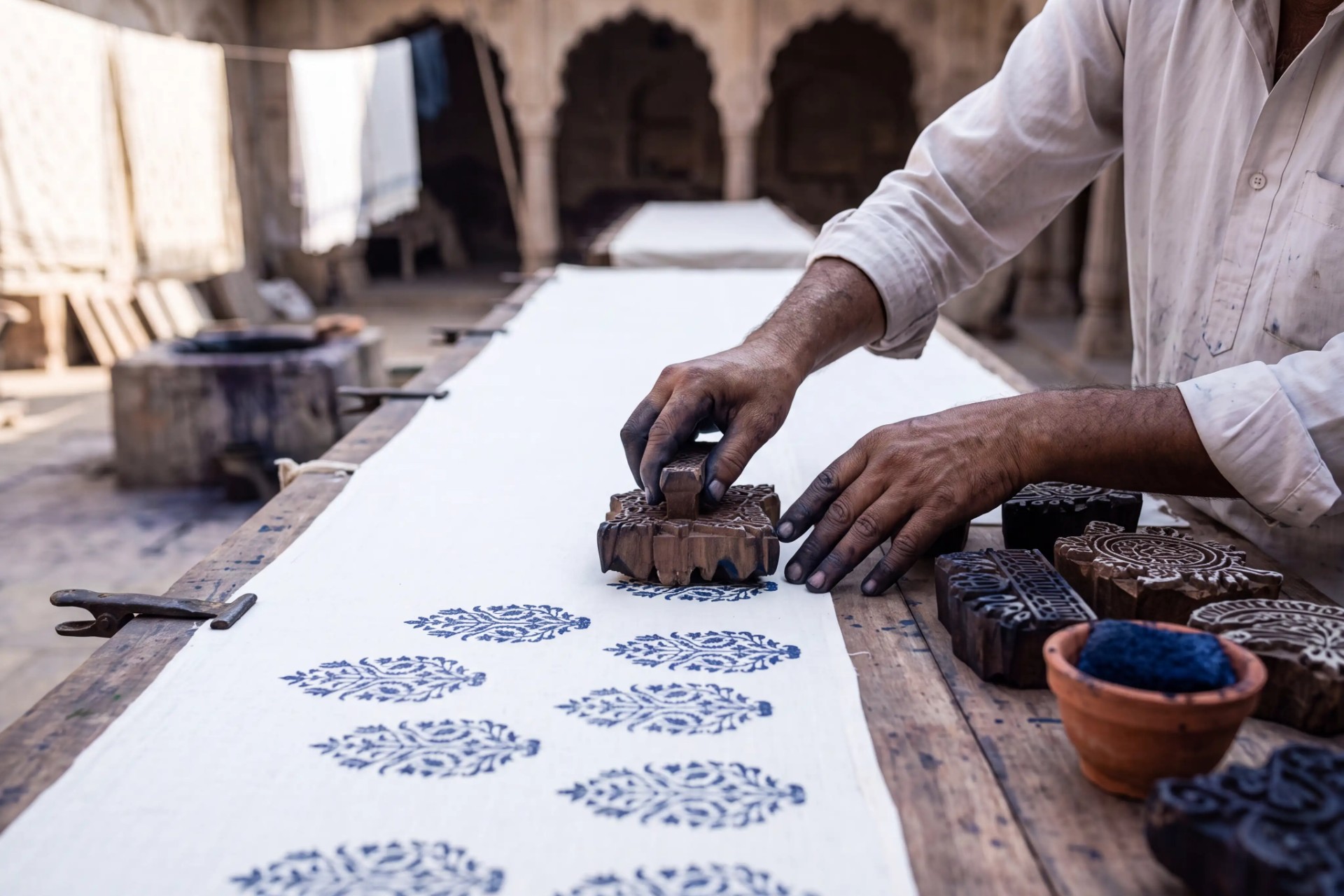
Thirty kilometres from Jaipur, the printing families of Bagru still carve their own blocks, mix their own resist and sift their own indigo. The whole process happens in a courtyard, in the open air.
The craft
The signature technique is dabu — a mud resist of clay, gum, lime and wheat chaff, stamped onto cotton with a hand-carved teak block and dusted with sawdust so it holds. Where the paste sits, dye cannot reach. The cloth goes into an indigo vat, and what emerges is a pale figure held inside a dark field. Reds come from alizarin boiled with alum, blacks from iron scrap fermented with jaggery. Between colours the cloth is washed in the river and beaten, then dried flat on the sand. A four-colour length may be printed, resisted and washed five separate times.
Provenance
Bagru hand block print holds a Geographical Indication, and the craft remains organised by family rather than by factory — the block carver, the printer, the dyer and the washer are often within one household or one lane. The natural dyes used here are the reason the palette is narrow: madder red, indigo blue, iron black, and the undyed cream of the base cotton.
The hands
Bagru’s printing is a courtyard choreography of the Chhipa community: dabu mud-resist mixed and blocked by hand, cloth sun-cured on open ground, indigo vats tended like living things. Every metre passes through many family hands before it is finished.
What the craft is up against
Screen-printed “Bagru” floods the market at hand-block’s expense. When the imitation wears the name, the original loses the wage.
What your gift sustains
Provenance protects wages: certified hand-block orders keep the vats alive and the natural-dye knowledge in daily use — not in a museum note.
Gift this craft — every order is sourced fairly from this cluster.