

VARANASI, UTTAR PRADESH · HANDLOOM AND TEXTILES · GI REGISTERED
In the weaving lanes behind the ghats of Varanasi, families still work handlooms set by their great-grandfathers. A single metre of brocade passes through seven pairs of hands before the last shuttle crosses it.
The craft
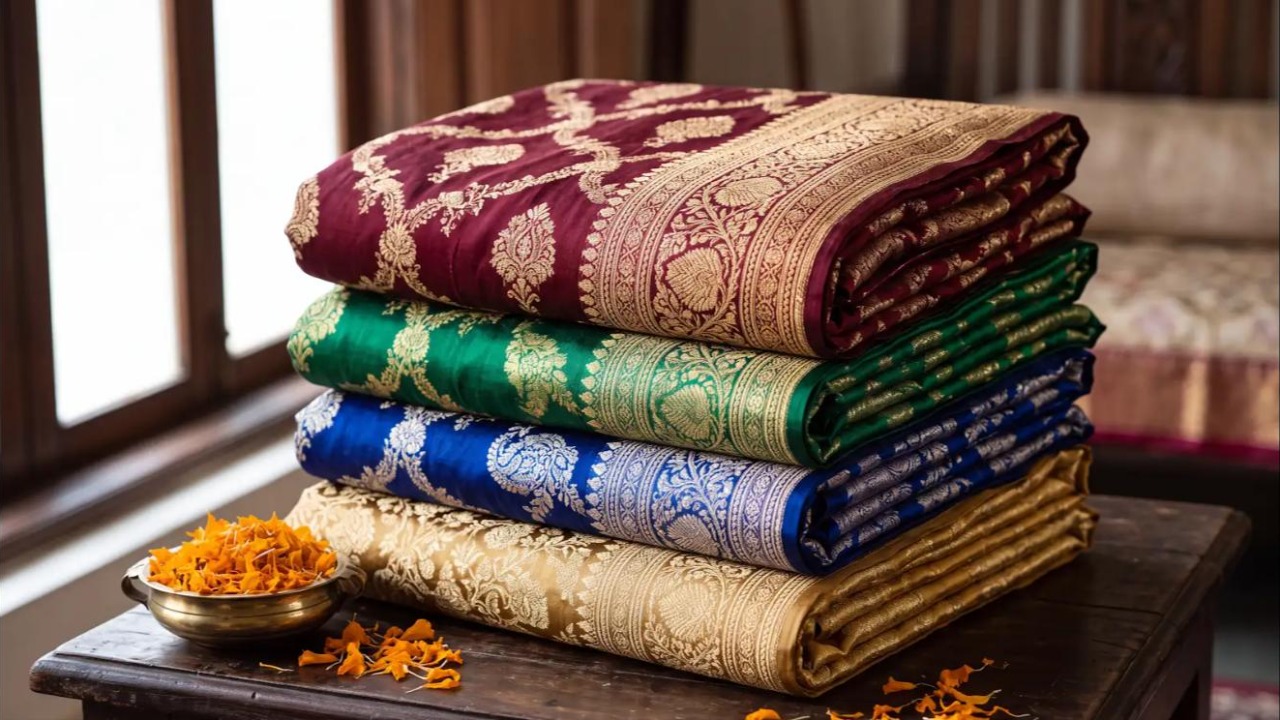
Banarasi brocade is built from silk and zari — flattened gold or silver-toned wire wound around a silk core — lifted into the cloth by a jacquard head above the loom. The patterning is Mughal in descent: the kadhwa buti worked as a separate motif, the jangla vine running the length of the field, the jhallar border of upright leaves. A heavy sari can hold several weeks of one family’s labour, and the weaver reads the design from a punched-card chain rather than from a drawing. Nothing is printed. Every flower is carried in the weft as the cloth grows.
Provenance
Banarasi silk carries a Geographical Indication covering the districts of Varanasi, Mirzapur, Chandauli, Bhadohi, Jaunpur and Azamgarh — the cluster that has supplied India’s wedding cloth for centuries. House of Parampara sources through the loom-master rather than through the market floor, and pays a per-purchase bonus over the standard loom wage so that apprentices in a weaving household can finish school before they take up the shuttle.
The hands
A true Banarasi metre is a relay: the naqshaband who translates the design, the warper, the dyer, the zari supplier, the weaver at the pit loom, the finisher, the checker. Seven pairs of hands per metre — seven livelihoods woven into every purchase.
What the craft is up against
Powerloom copies collapse handloom prices, and collapsed prices become weaver debt. Many loom families now weave below the cost of their own labour.
What your gift sustains
A fairly priced Banarasi order pays all seven stations properly. Gift one, and you have quietly employed a street’s worth of Varanasi for the weeks it took to make.
Gift this craft — every order is sourced fairly from this cluster.