

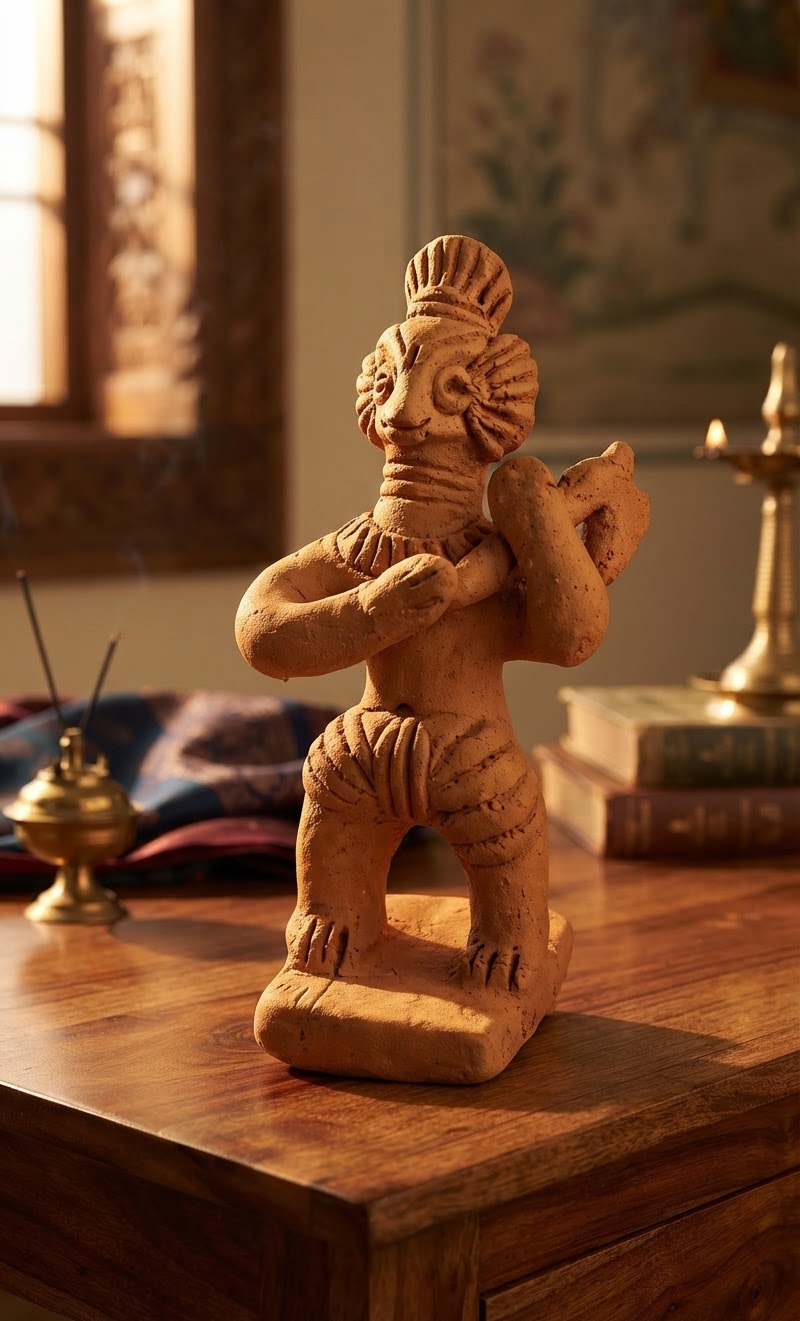
MOLELA, RAJASTHAN · POTTERY AND TERRACOTTA · GI REGISTERED
A little over twenty Kumbhar potter households in the village of Molela, in the hills of Rajsamand, make shrine-plaques for the Bhil, Mina, Gujjar and Garasia communities of southern Rajasthan and northern Gujarat — household gods, made hollow so they can travel.
The craft
The work is divided inside the household: the men mould the figures, the women prepare the clay and paint the finished image. A plaque begins as a slab of local clay rolled against a fired mother-plaque to pick up its base relief. Features are then pressed in by hand and the wet relief is lifted free with a knife under-cut behind the head. The back is hollowed with a spoon — partly so the piece will not crack in the kiln, partly so it stays light enough to carry home on a cart. After drying, the plaques are fired and often left the colour of the earth they came from, or picked out in a few flat pigments. The subjects are Dharamraj, Nagaraja, local mother goddesses and village guardians, and the potter makes whichever of them the family standing in front of him has come for.
Provenance
Molela clay work holds a Geographical Indication. These plaques are not bought off a shelf: the client communities travel to the village once a year with their bhopa, the priest-bard of their sect, to choose the deity of their clan, and the chosen plaque is washed in the river and then carried home held above waist height, because by then it is already a god. That is why the craft has survived as ritual rather than as decoration, and why the potters’ year is set by other people’s festivals. The plaques hang in rows from the workshop rafters while they dry, waiting for the season’s single kiln.
The hands
Molela’s gods are hollow — built up from slabs of river clay by a handful of Kumhar potter families who have supplied votive plaques to tribal shrines for generations. The whole tradition lives in a few dozen courtyards.
What the craft is up against
Shrine demand is seasonal and thin. When the plaque season ends, so does the income — and young Kumhars weigh the craft against a bus ticket to the city.
What your gift sustains
New markets for Molela’s relief work fill the empty months. Each order is one more reason for a young potter to stay at the slab table — and one more year the tradition holds.
Gift this craft — every order is sourced fairly from this cluster.