

NIZAMABAD, UTTAR PRADESH · POTTERY AND TERRACOTTA · GI REGISTERED
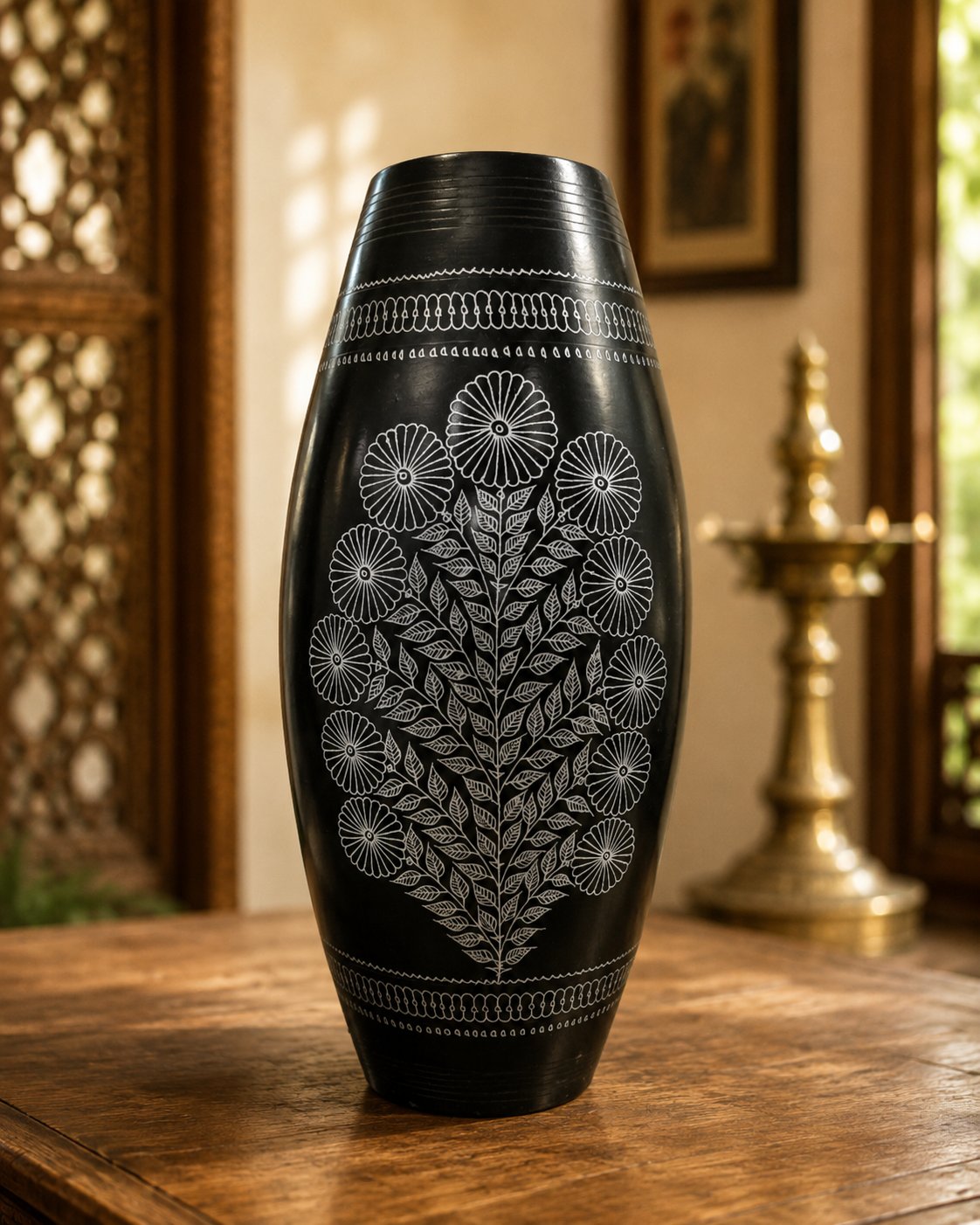
Nizamabad’s second life happens after the smoke. Once a pot has come out of the reducing kiln black, it is scored with a fine stylus and rubbed with a metallic paste until the lines shimmer like inlaid silver.
The craft
The engraver works freehand into the fired surface, cutting a shallow groove that exposes the paler body beneath. A paste of powdered tin and lead alloy is then pressed into the grooves and burnished the following morning, when the air is cool. No silver is used, and nothing is applied on top — the shine comes from metal sitting below the level of the surface, which is why it survives handling. The vocabulary is fixed and carried in the head: running vines, peacocks, lotus buds, and the fine cross-hatch that fills a shoulder. The cutting is done in the last hour of daylight.
Provenance
The engraved ware and the plain black ware are the same GI-registered tradition at two stages, and most households do both. Because the pattern is never templated, no two pots carry the same vine — the engraver begins at the rim and lets the curve of the pot decide where the line travels next.
The hands
Every Nizamabad pot has two makers: the potter who throws and smoke-fires the black body, and the engraver who cuts the silvery vines into its skin afterwards. The second hand rarely appears in any credit.
What the craft is up against
Invisible workers are underpaid workers. When only the pot is named, the engraving stage becomes a line item to squeeze.
What your gift sustains
We put the engraver on the story card, by name wherever consent allows. Naming them is part of the payment — recognition first, then the rate that follows from it.
Gift this craft — every order is sourced fairly from this cluster.