

KUMARTULI, KOLKATA · POTTERY AND TERRACOTTA · HERITAGE CRAFT
Kumartuli — literally the potters’ quarter — is the lane in north Kolkata where Bengal’s Durga idols are built each autumn. The same fingers that raise a ten-armed goddess also model a clay owl the size of a fist.
The craft
A figure begins as a bamboo and straw armature bound with jute rope. Over it goes ental mati, the sticky silt of the Hooghly, mixed with rice husk and applied in layers, each allowed to dry before the next. The face is made separately in a wooden mould, then finished by hand — the eyes are painted last, on a fixed morning, and always by the senior sculptor. A large idol is built over months and dissolved within days of the festival, which is the point of it. The sculptors carry each armature in memory rather than on paper.
Provenance
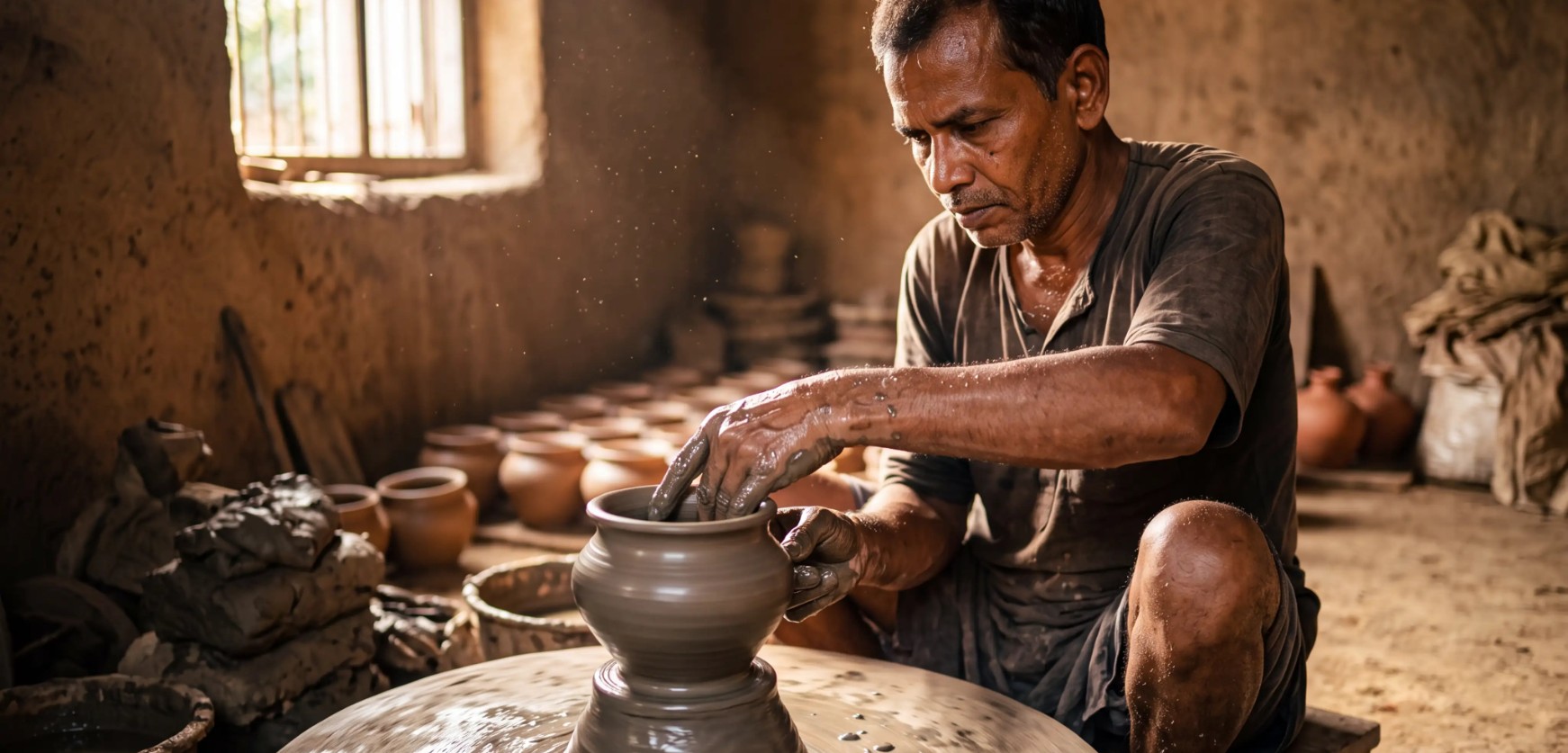
Kumartuli has supplied Bengal’s festivals since the eighteenth century, and its rhythm is fixed by weather: the sculptors work through the dry months and go quiet when the rains come, since river silt will not hold its shape in wet air. In those idle months the same workshops turn to smaller pieces — figurines, lamps and household forms that carry the identical hand at a domestic scale.
The hands
Kumartuli is a neighbourhood-sized workshop: lanes of studios where sculptor families raise straw-and-clay deities to festival scale, season after season, under rented roofs in the middle of a costly city.
What the craft is up against
The idol economy is boom-and-bust. A studio can earn its year in two frantic months, then face ten months of rent with the clay drying quiet.
What your gift sustains
Off-season commissions — miniatures, portrait busts, décor pieces — are what smooth the cliff-edge. Your order in the quiet months is worth more to a Kumartuli studio than the same order at festival peak.
Gift this craft — every order is sourced fairly from this cluster.