
THANJAVUR, TAMIL NADU · PAINTING AND FOLK ART · GI REGISTERED
The painters were known as Rajus in Thanjavur and Tiruchirappalli and as Naidus in Madurai — Telugu-speaking families who came south from the Rayalaseema country after Vijayanagara fell, and stayed to work for the courts that took them in. A Thanjavur painting is less a picture than a small piece of built relief, and it is still made the way those households made it.
The craft
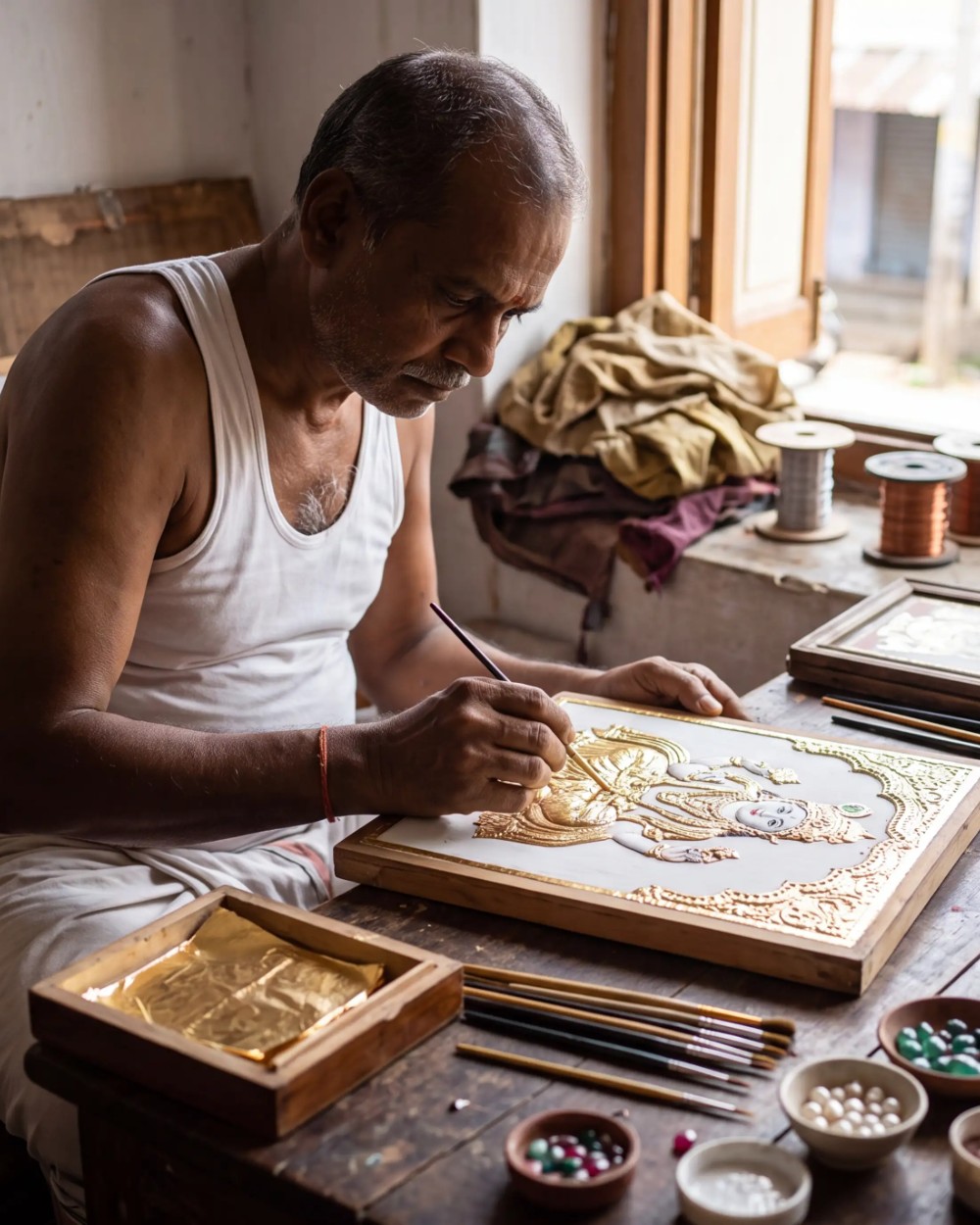
A panel passes through several pairs of hands rather than one. The support is a plank, traditionally jackfruit wood, over which cloth is stretched and sized with chalk. The composition is drawn out, and the areas that are meant to stand up from the surface are built with a gesso paste and left to harden. Twenty-two carat gold foil is laid over that relief and burnished down, and semi-precious or glass stones are set into the ornament.
Only after all of that is the rest of the panel painted, in flat and saturated colour. In a family studio the drawing, the gesso work, the gilding and the colouring are usually divided between different people, and the gilding — the stage that cannot be corrected once it is laid — is the one entrusted last. The subjects are overwhelmingly devotional, with Balakrishna the most beloved among them, usually seated inside an arch and flanked by attendants.
Provenance
Thanjavur paintings carry a Geographical Indication registration for Tamil Nadu. The form took its present shape under the Maratha rulers of Thanjavur in the eighteenth and nineteenth centuries, when the Raju and Naidu workshops folded their patrons’ tastes into what they had brought south with them. Those painters almost never signed a panel, so what has survived is not a roll of names but a line of households — and it is the descendants of that line who are still working in and around Thanjavur. We work only with studios there that still lay real gold foil rather than metallic film, and we say so on the certificate.
The hands
Thanjavur’s studios are family benches. In households descended from the Raju and Naidu painter lineages, one member raises the gesso relief, another lays the leaf, a third paints the deity’s face last — the eyes always at the end. The order of hands has not changed in generations; only the certainty of their income has.
What the craft is up against
Genuine gold leaf must be bought before a single commission is confirmed, and dealer margins often take the largest share of the final price. Printed “Tanjore-style” pictures sell for a fraction, teaching buyers the wrong price for the real thing.
What your gift sustains
A direct commission funds the leaf upfront and pays the studio, not the showroom chain. One fairly priced frame keeps a family bench working for weeks — and keeps the next generation painting.
Gift this craft — every order is sourced fairly from this cluster.