
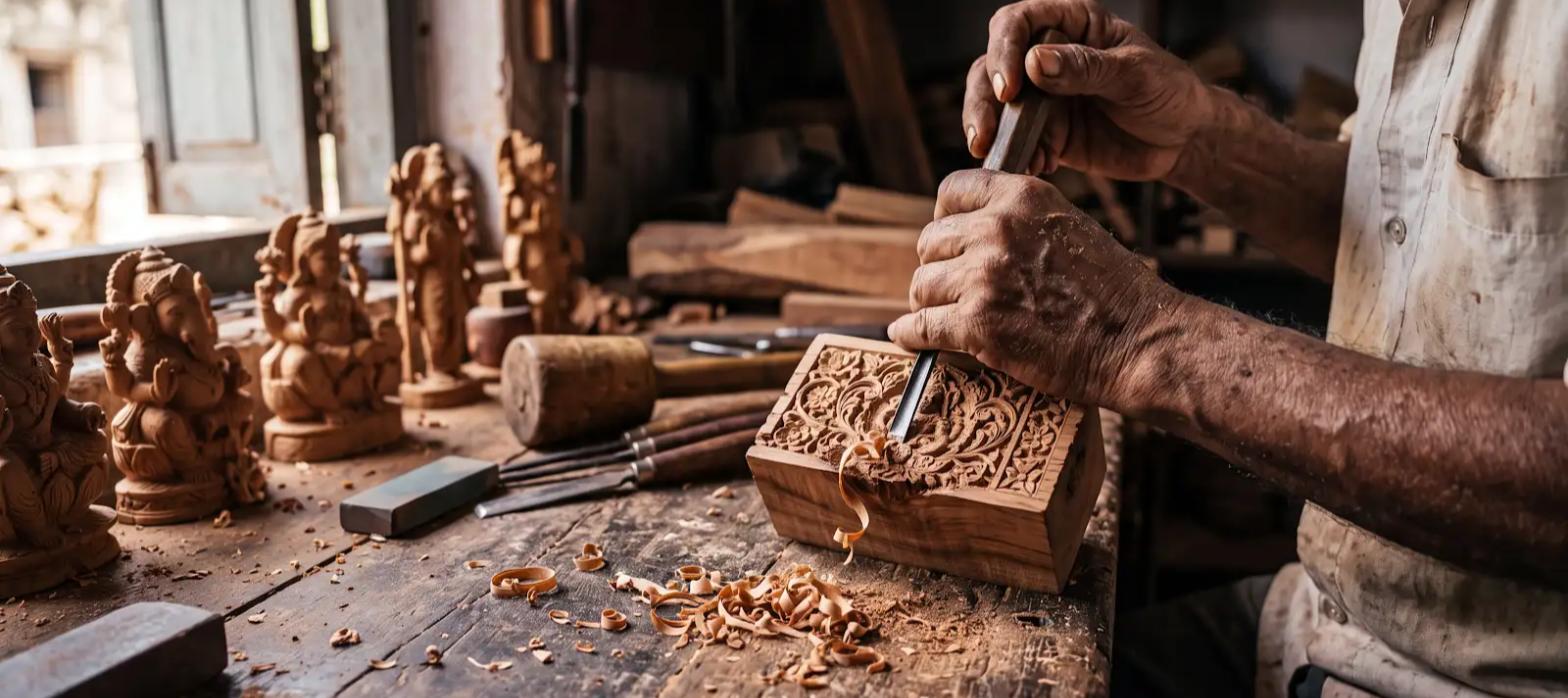
Carved in Saharanpur’s wood-craft mohallas — furniture-scale commissions that employ whole workshops, not single hands.
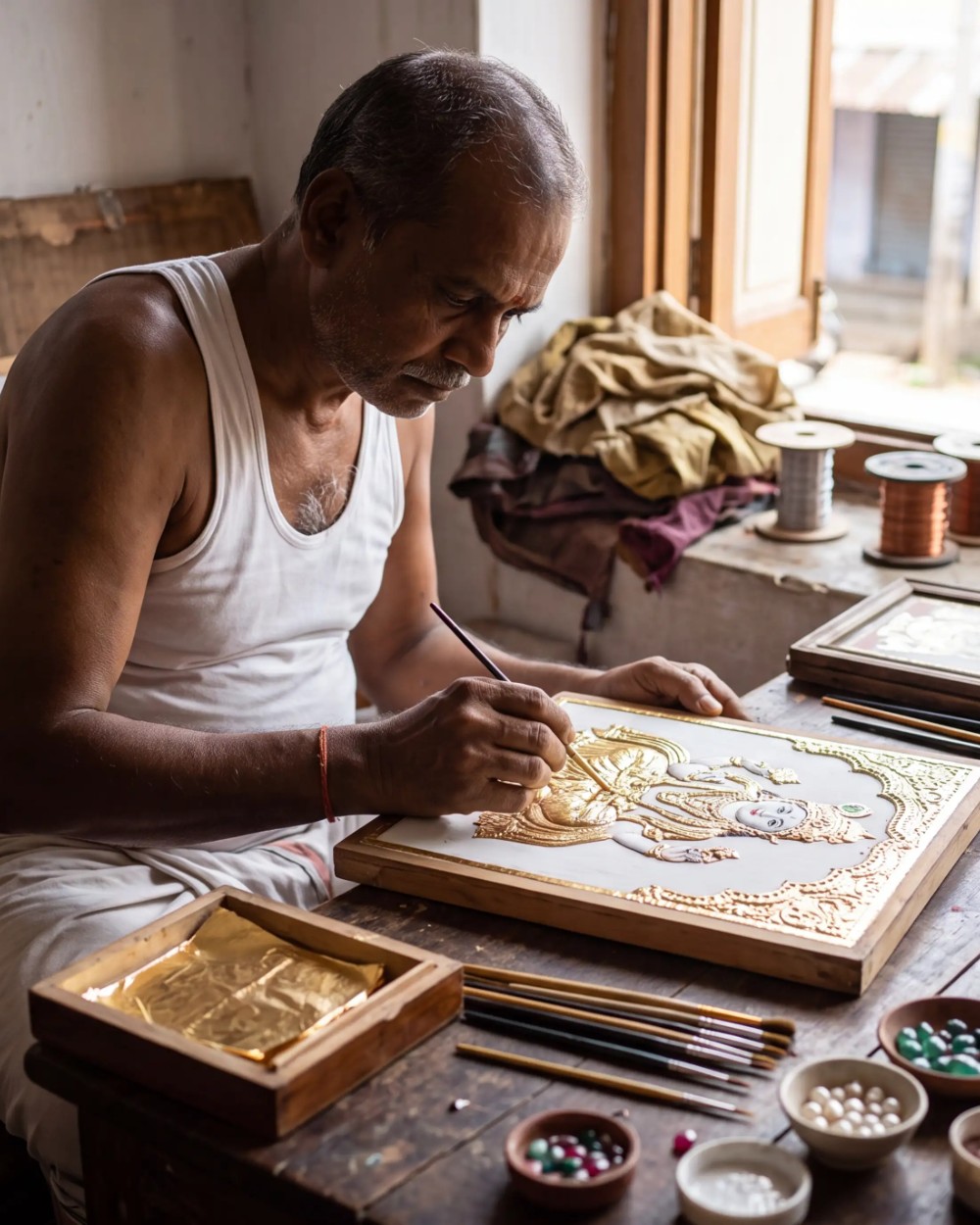
Gilded by Thanjavur’s Raju-lineage studios — 22-carat leaf over raised gesso, a commissioned frame equal to weeks of a family bench.
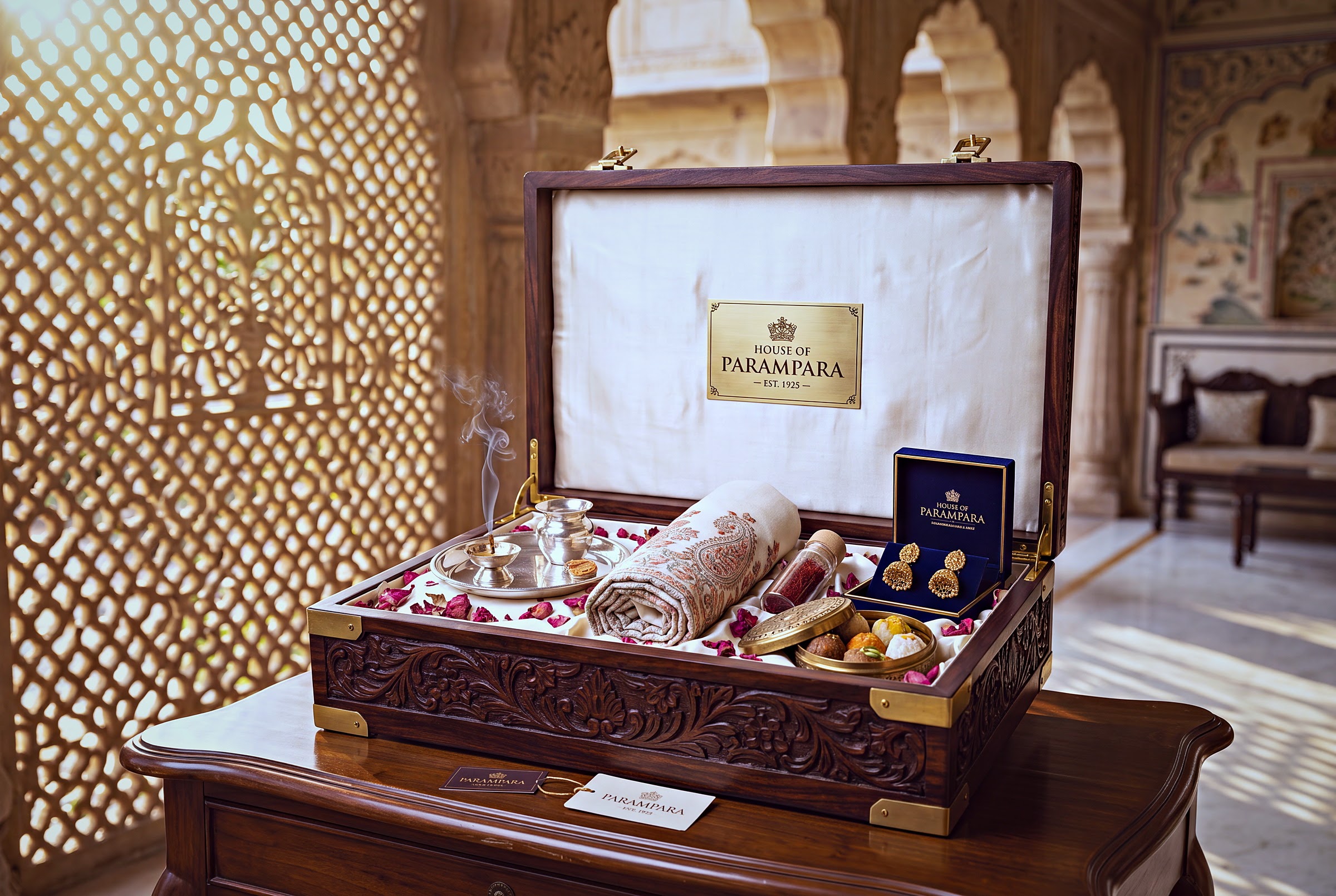
Rajasthan’s koftgari masters hammer gold and silver wire into steel — a court-armoury craft surviving today as collectable art.
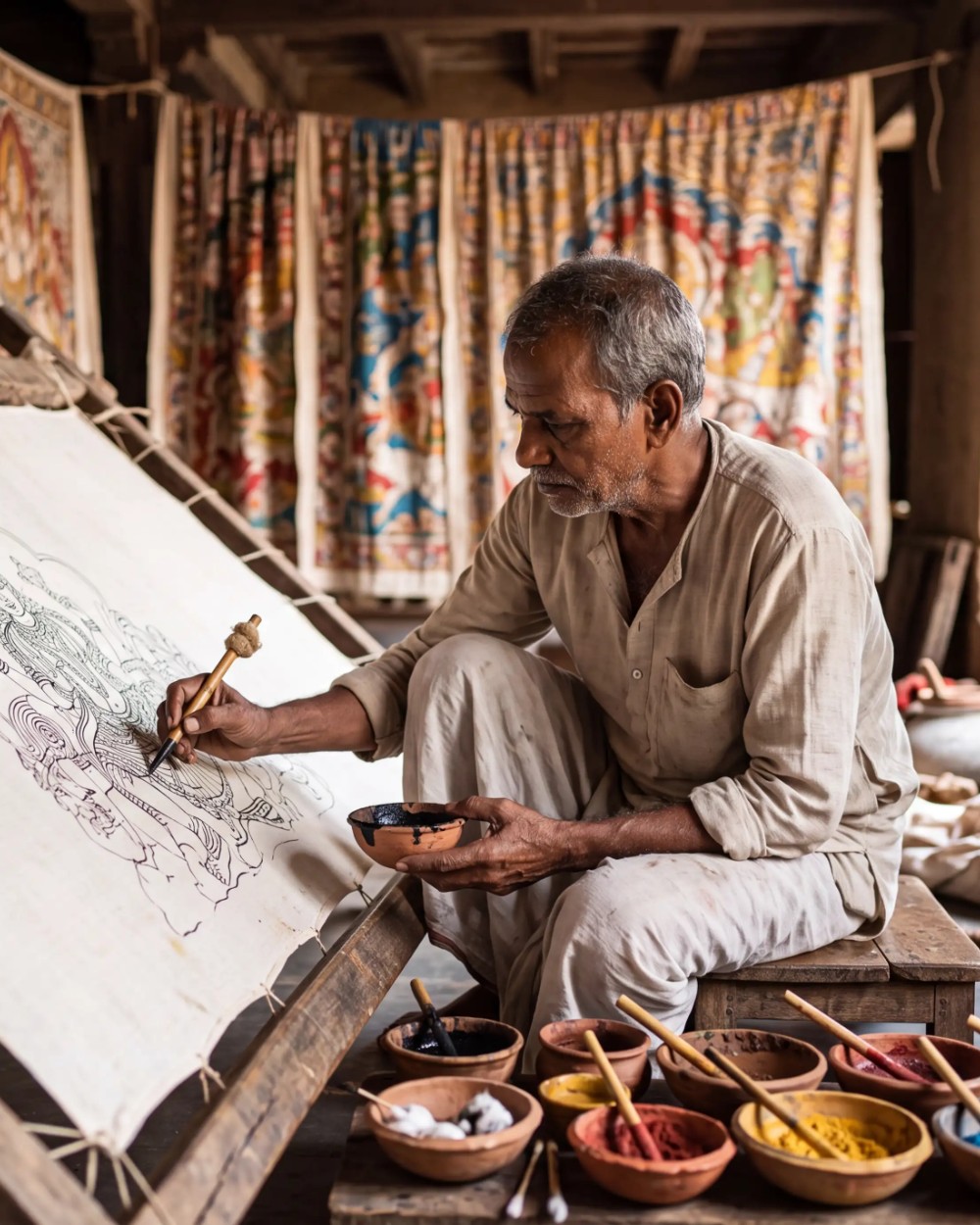
Temple-art families draw epics with a bamboo kalam and natural dyes — while screen-printed imitations borrow the craft’s name.
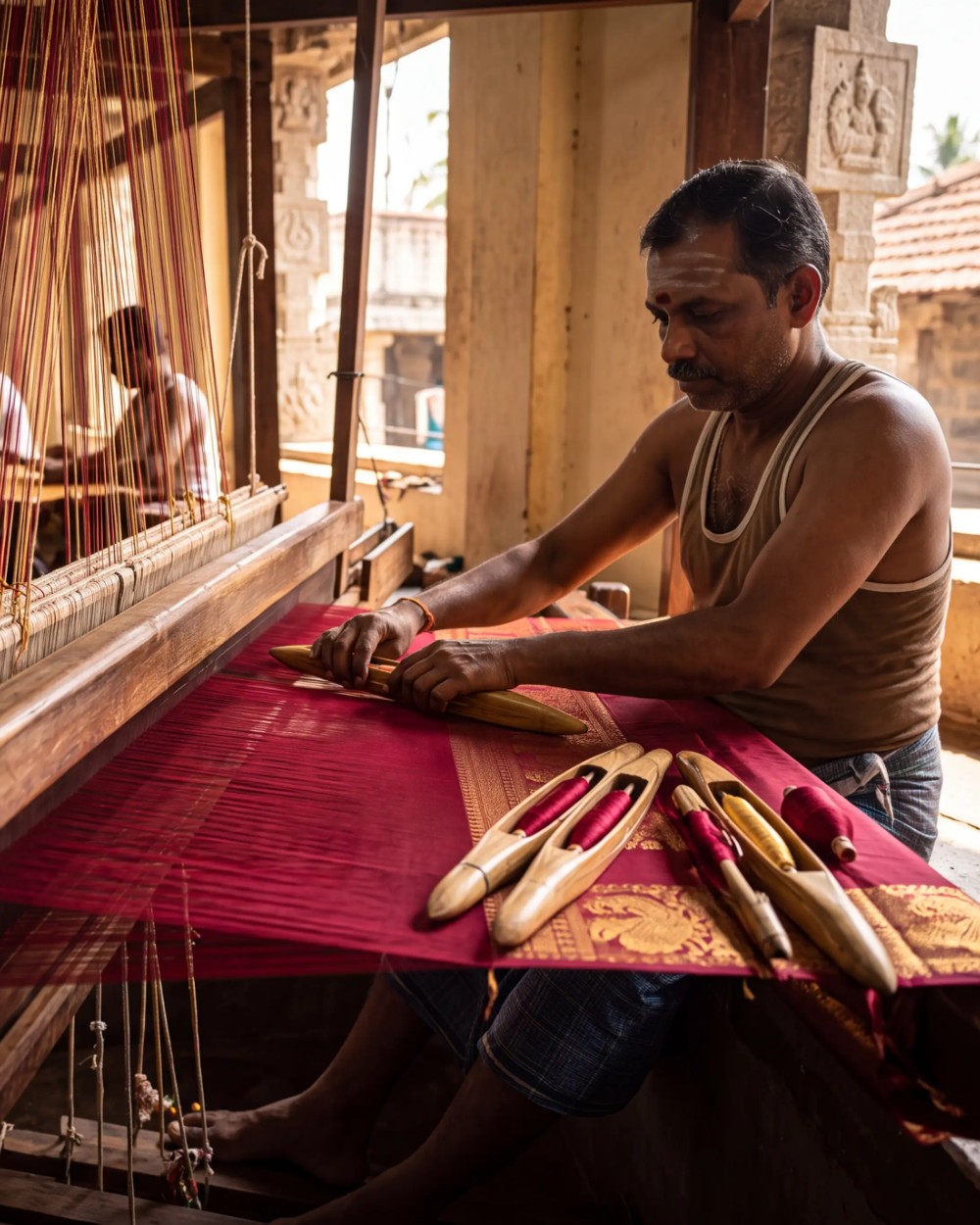
Woven by Kanchipuram’s co-operative weavers with the true korvai join — weeks of a loom household’s labour in temple colour.
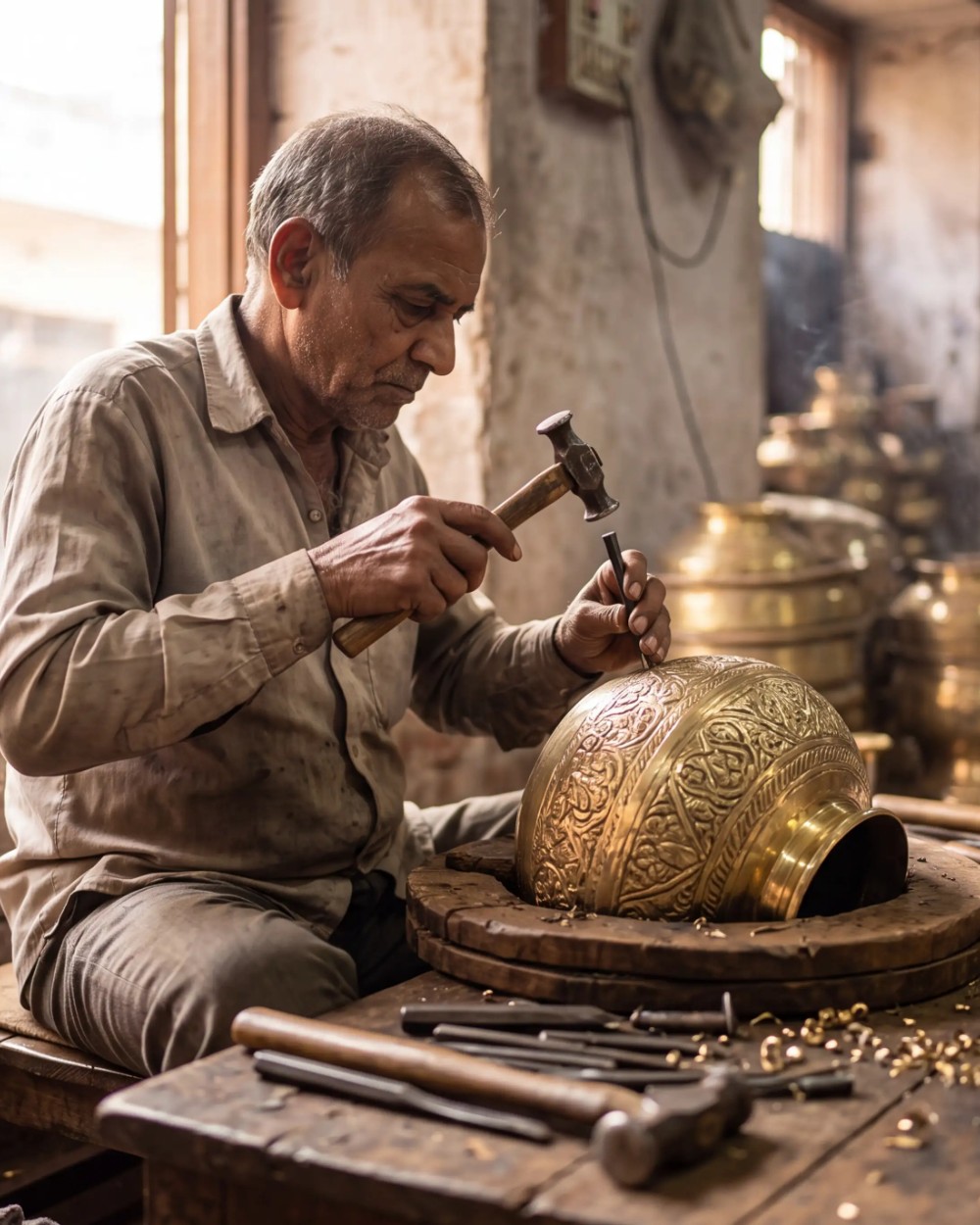
Cast, engraved, enamelled and stone-set in Moradabad — a peacock of two hundred plumes whose finishing hands are named on the card.
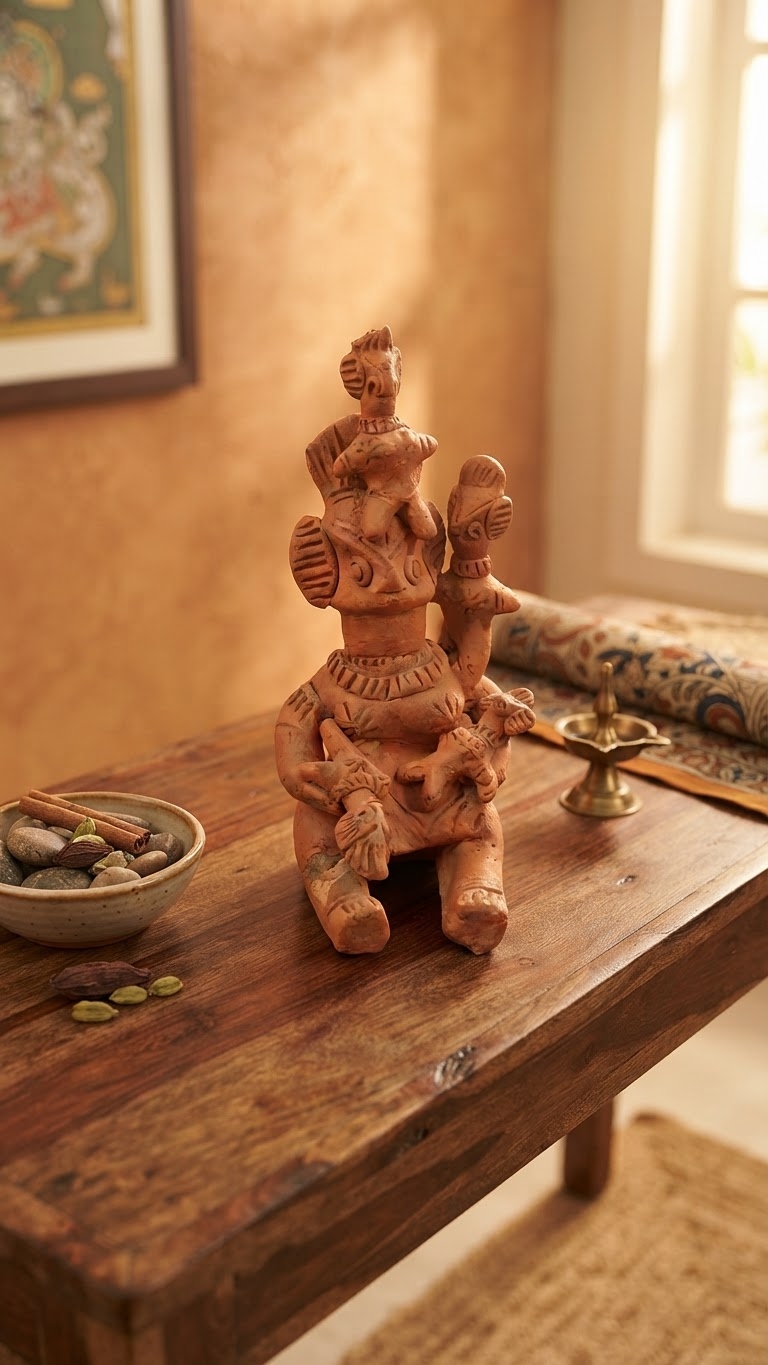
The wall-language of Mithila — fish, lotus, auspicious lines — moves onto fired clay, and becomes income earned by women.
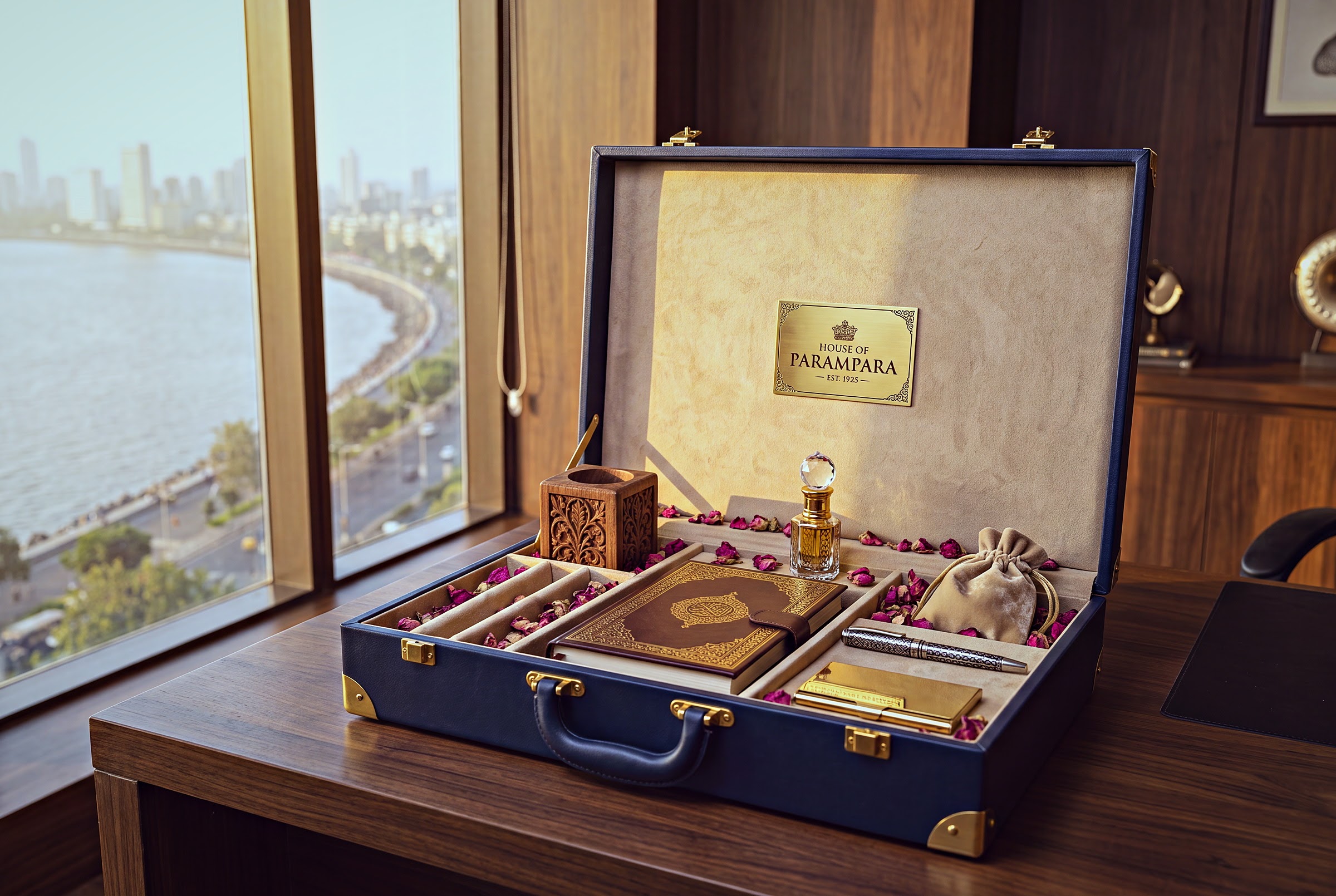
Kiln-fused meenakari colour over metal — a miniature palace built at Jaipur’s enamel benches, one firing at a time.
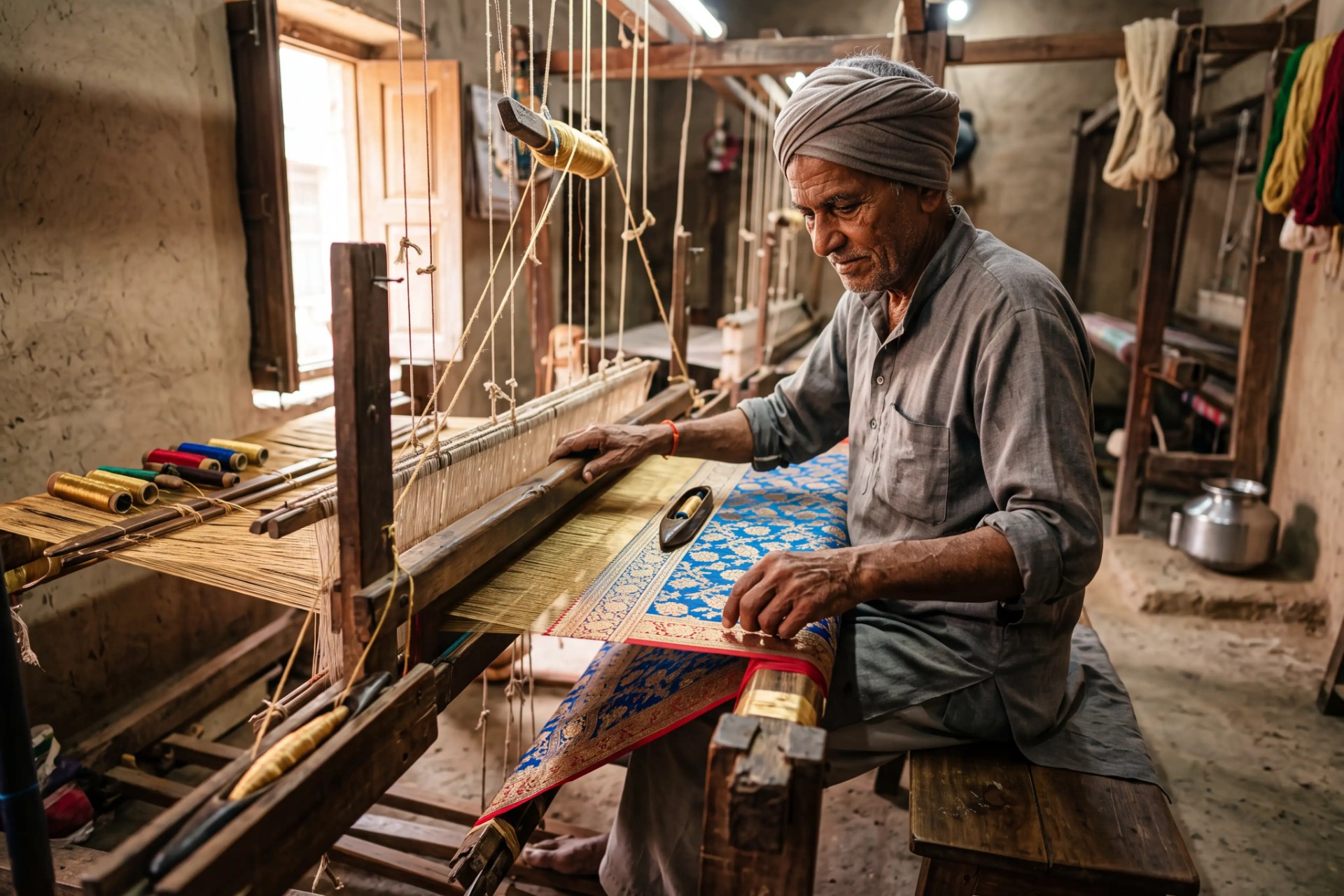
From Maheshwar’s riverside looms, worked in large part by women — five silks representing five weeks of weaving, fairly paid.
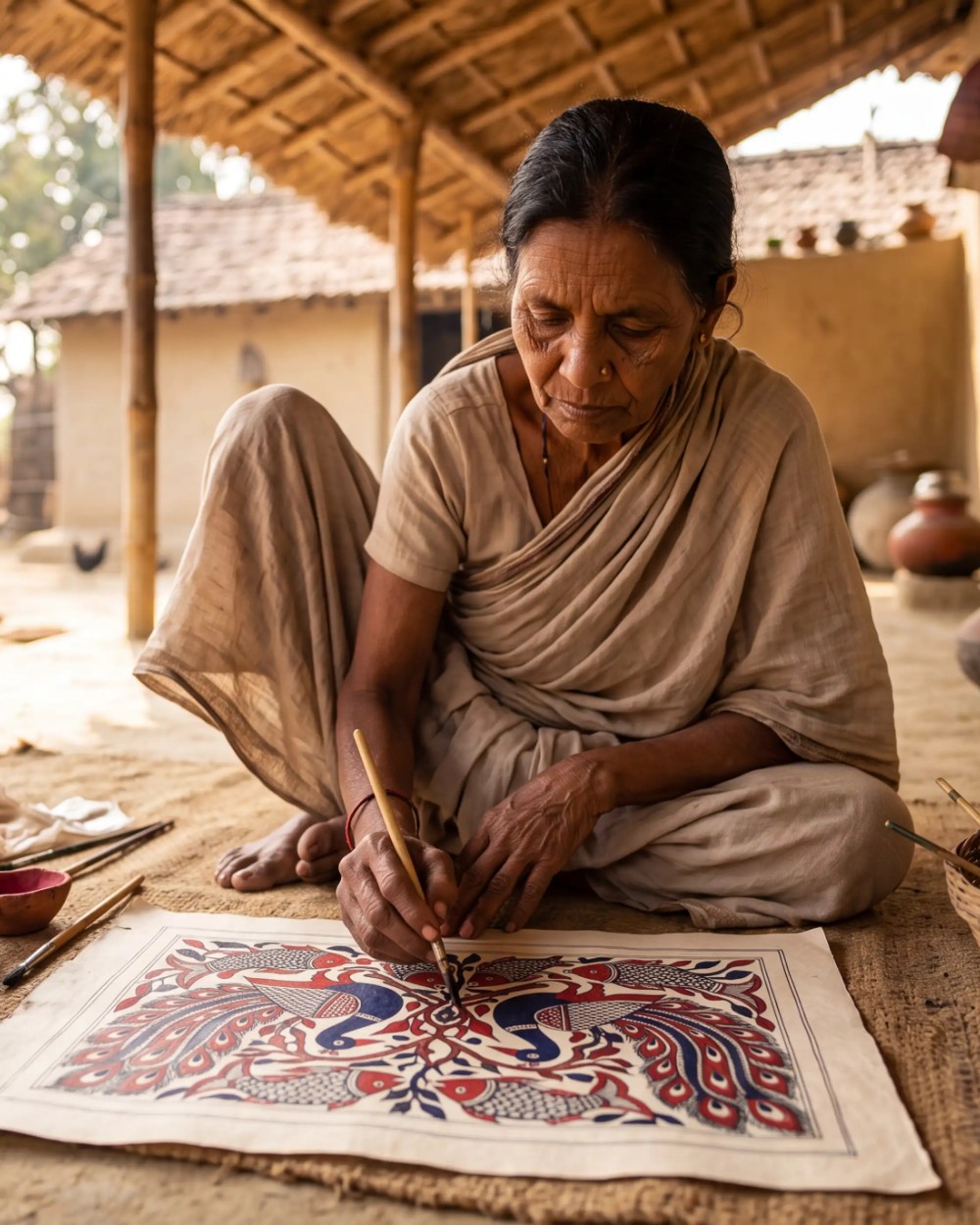
In Jitwarpur, Madhubani passes grandmother to granddaughter — national awards on the wall, modest earnings in the hand.
We value your privacy
We use essential cookies to run this site. With your permission we would also use analytics cookies to understand how the site is used. Nothing non-essential is set until you agree. Read our Privacy Policy.
Strictly necessary
Required for the site to function — security, load balancing and remembering this choice. These cannot be switched off.
Statistics
Google Analytics, so we can see which collections and artisan stories people read. Data is aggregated and never used to identify you.
Preferences
Remembers choices such as language or region so you do not have to set them again.
Marketing
Used to measure campaigns and show relevant content. We do not currently run advertising, so this stays off unless you enable it.