
KERALA BACKWATERS · METAL CRAFT · HERITAGE CRAFT
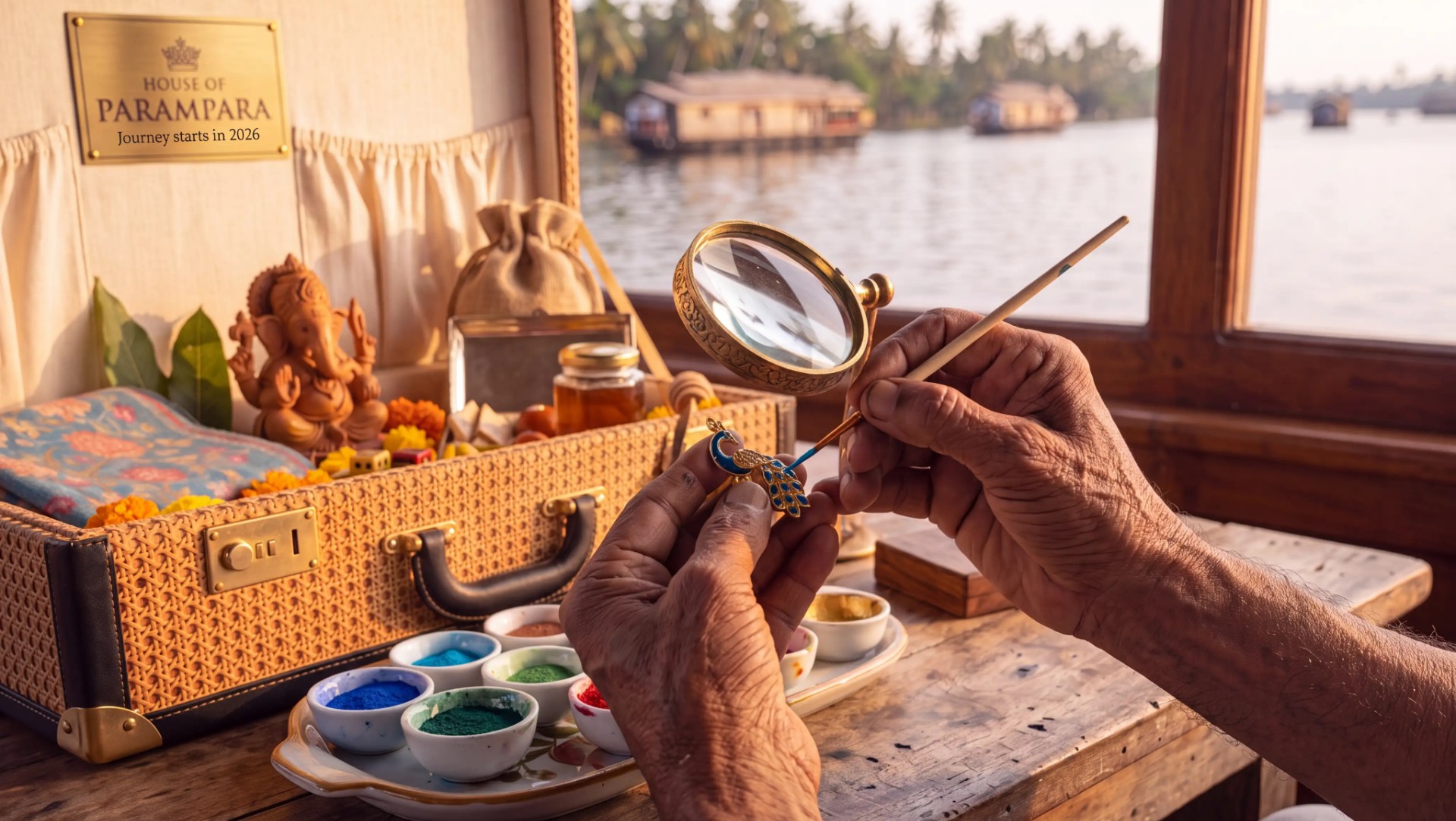
On the backwaters at Kumarakom, a craftsman paints peacocks in fine meenakari — coloured glass fused onto metal in a kiln, a technique that arrived in India through the Mughal court and never left.
The craft
Meenakari is enamelling. The metal is first engraved so that each colour has a walled cell to sit in; powdered mineral glass is packed into the cells wet, then fired until it melts and bonds to the metal beneath. Colours are fired in sequence from the most heat-resistant to the least — white and blue survive the hottest kiln, red the least, so red goes in last. Each firing risks everything already laid down. The piece is finally rubbed back and burnished until the glass sits level with the metal ridges holding it.
Provenance
The technique is best known from Jaipur, where it is worked on gold, but it travels wherever there is a jewellery trade, and the smaller Kerala workshops apply it to brooches, ornaments and miniature panels. The slow, patient character of the process is its defining constraint: nothing about enamelling can be hurried, because every colour has to survive the fire of the colour that follows it.
The hands
This is a craft of the few. Far from the famous enamel centres, a small number of practitioners in Kerala keep meenakari’s kiln-fused colour alive — masters working without the safety net of a large cluster around them.
What the craft is up against
Rarity cuts both ways: there is no cluster infrastructure, no shared market channel, and when a master retires without a funded apprentice, the local practice can end with him.
What your gift sustains
Here, patronage is apprenticeship funding. Every commission buys teaching time as much as enamel — it is how one master’s kiln knowledge refuses to end with one lifetime.
Gift this craft — every order is sourced fairly from this cluster.