

SRIKALAHASTI, ANDHRA PRADESH · PAINTING AND FOLK ART · GI REGISTERED
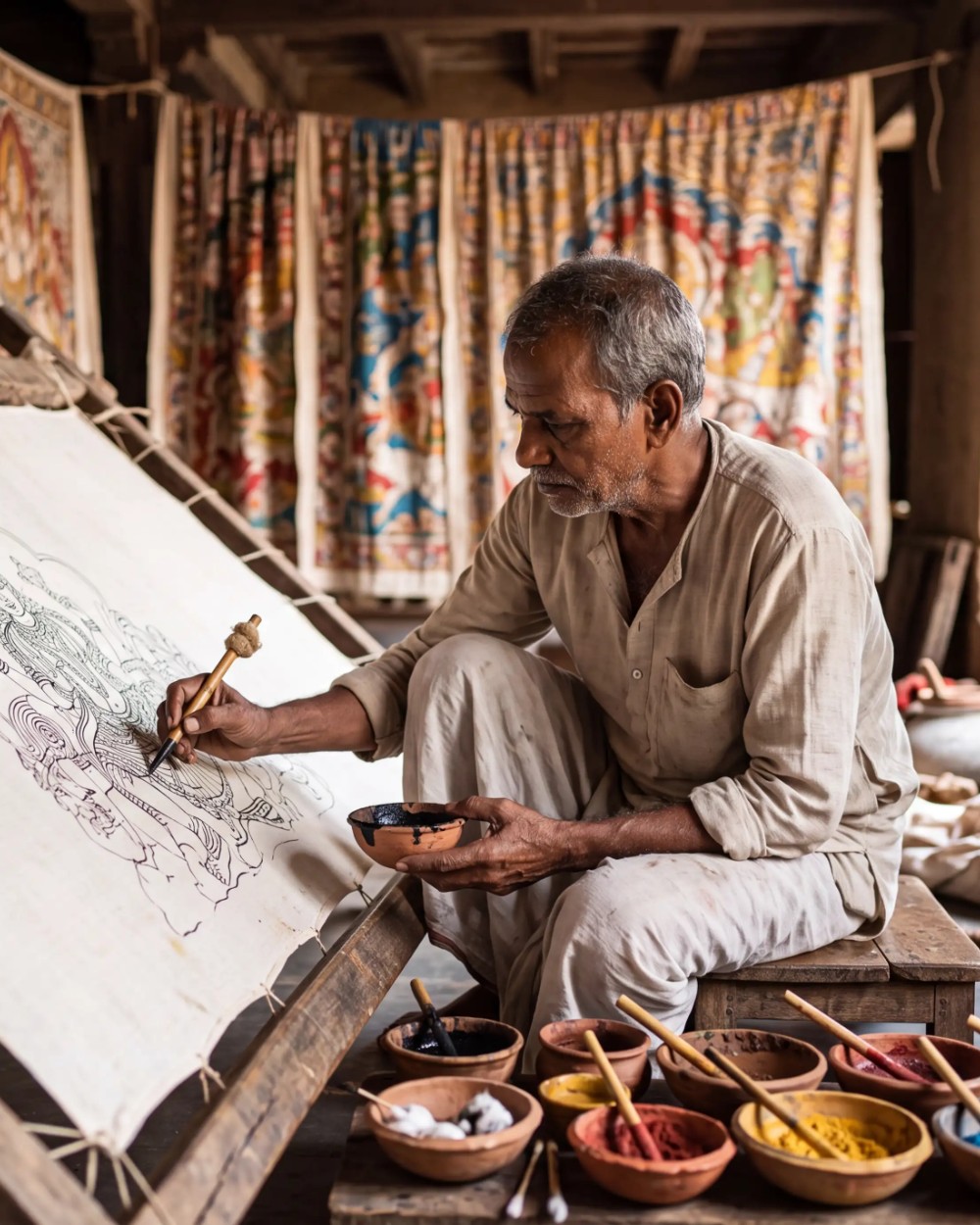
Kalamkari means pen work. On the Coromandel coast at Srikalahasti, whole temple hangings are drawn freehand on cotton with a bamboo stylus tipped in a bundle of fine hair — no block, no stencil, no pencil.
The craft
The cloth is first treated with myrobalan and buffalo milk, which fixes the dye and stops the black from bleeding. The black itself is made by fermenting iron filings with jaggery for weeks. Reds and yellows come from madder and myrobalan, raised in alum mordant so that the pattern appears only after boiling. Between every colour the cloth is washed in running water and beaten against stone, then dried on the riverbank. A single hanging can take three weeks and eight washings. The artist outlines a full narrative panel — twenty-seven figures in a Ramayana scene — carrying the whole composition in his head.
Provenance
Srikalahasti Kalamkari holds a Geographical Indication and is distinct from the Machilipatnam school, which is block-printed rather than drawn. The Srikalahasti tradition grew inside the temple, producing narrative cloths used to tell epics to congregations, and it kept the freehand pen because a story told in line cannot be assembled from repeated blocks.
The hands
In Srikalahasti, kalamkari is a household chain: the painters who draw epic narratives freehand with a bamboo pen, and the women who run the dye-kitchen — preparing myrobalan baths, milk mordants and the slow natural colours that make the cloth glow.
What the craft is up against
Screen-printed “kalamkari” floods the market at prices no hand-drawn cloth can meet. The imitation borrows the name and starves the households that earned it.
What your gift sustains
Buying hand-drawn keeps both the kalam and the dye-kitchen working — and much of that dye-kitchen income is women’s income, spent on the household.
Gift this craft — every order is sourced fairly from this cluster.